Dave revisits a favourite and finds a new engine and technologies … that go to eleven.

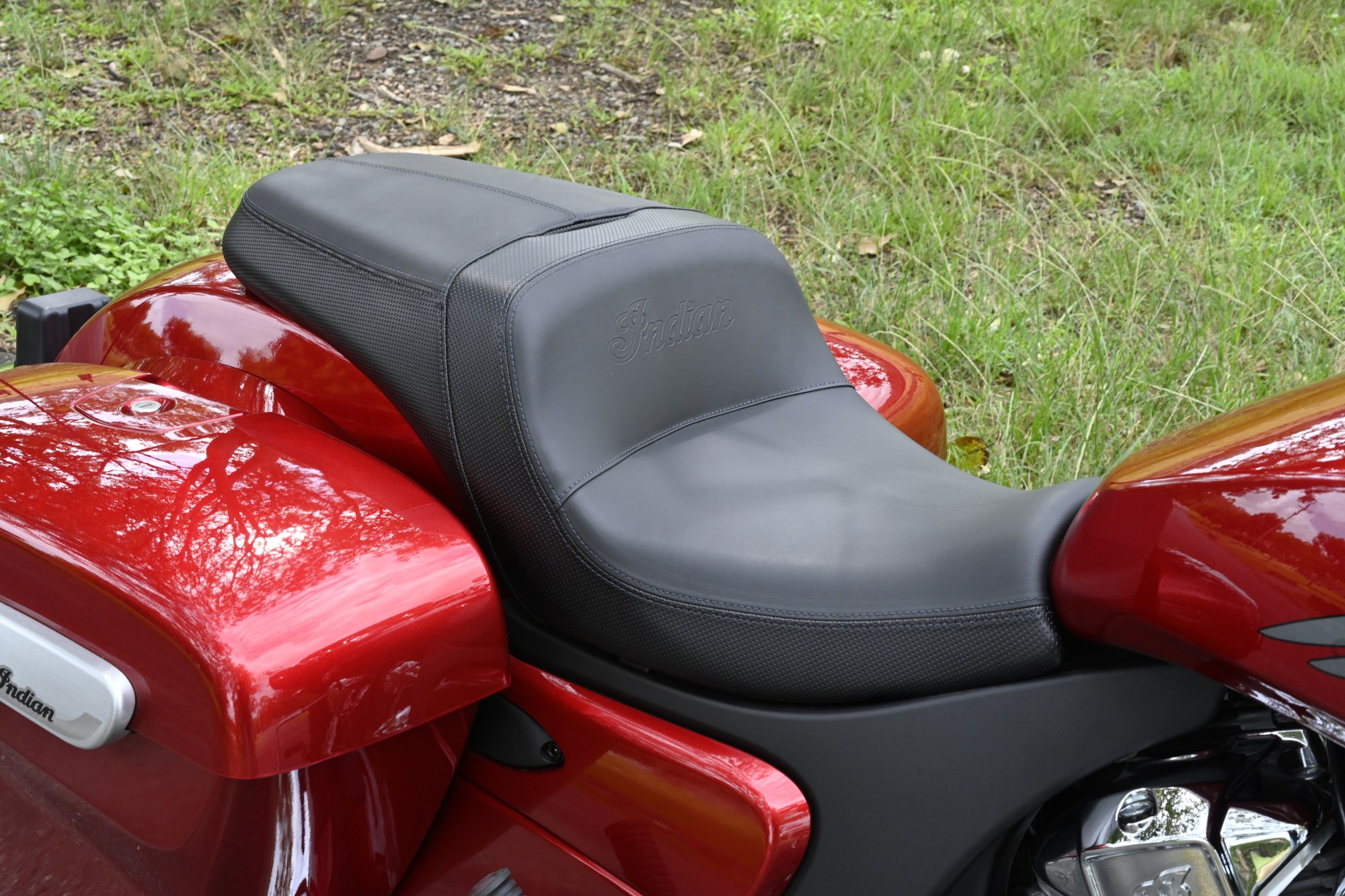
The first thing I noticed when I rode the shop demo out of the Springwood Indian dealership was just how comfortable the bike is.
Notable because this is the fifth incarnation of the Chieftain that I have been fortunate enough to test. By virtue of its revised saddle and associated ergonomics, the latest version is easily the most comfortable. Supremely so for the taller gentleman, right out of the box.
Its relatively low saddle height of 672 mm will also accommodate those of shorter stature nicely, but for us big blokes, this is a roomy and spacious mount — reminiscent of some of the capacious Victory tourers.
To begin
From Moss Street, I wheeled onto the M1 Freeway and headed south with no particular destination in mind — and settled into the ride.
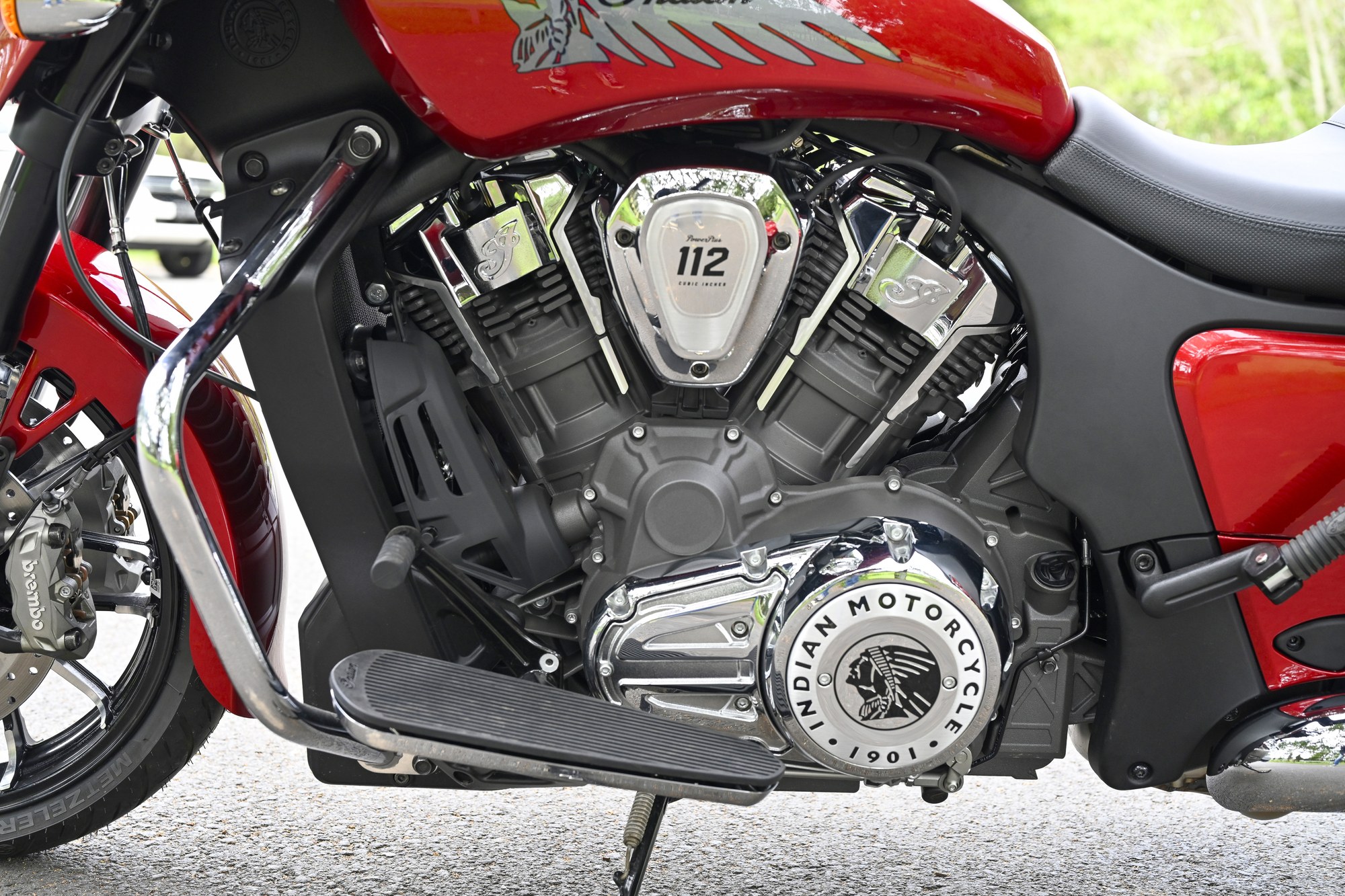
The on-ramp revealed the first surprise from the new 112 PowerPlus engine. It has some very nice, hang-on-tight, hurry-up.
As I discovered more than once over the full course of the test, giving it a handful from low down in Sport mode produces a quite exhilarating surge, and the front wheel gets surprisingly light.
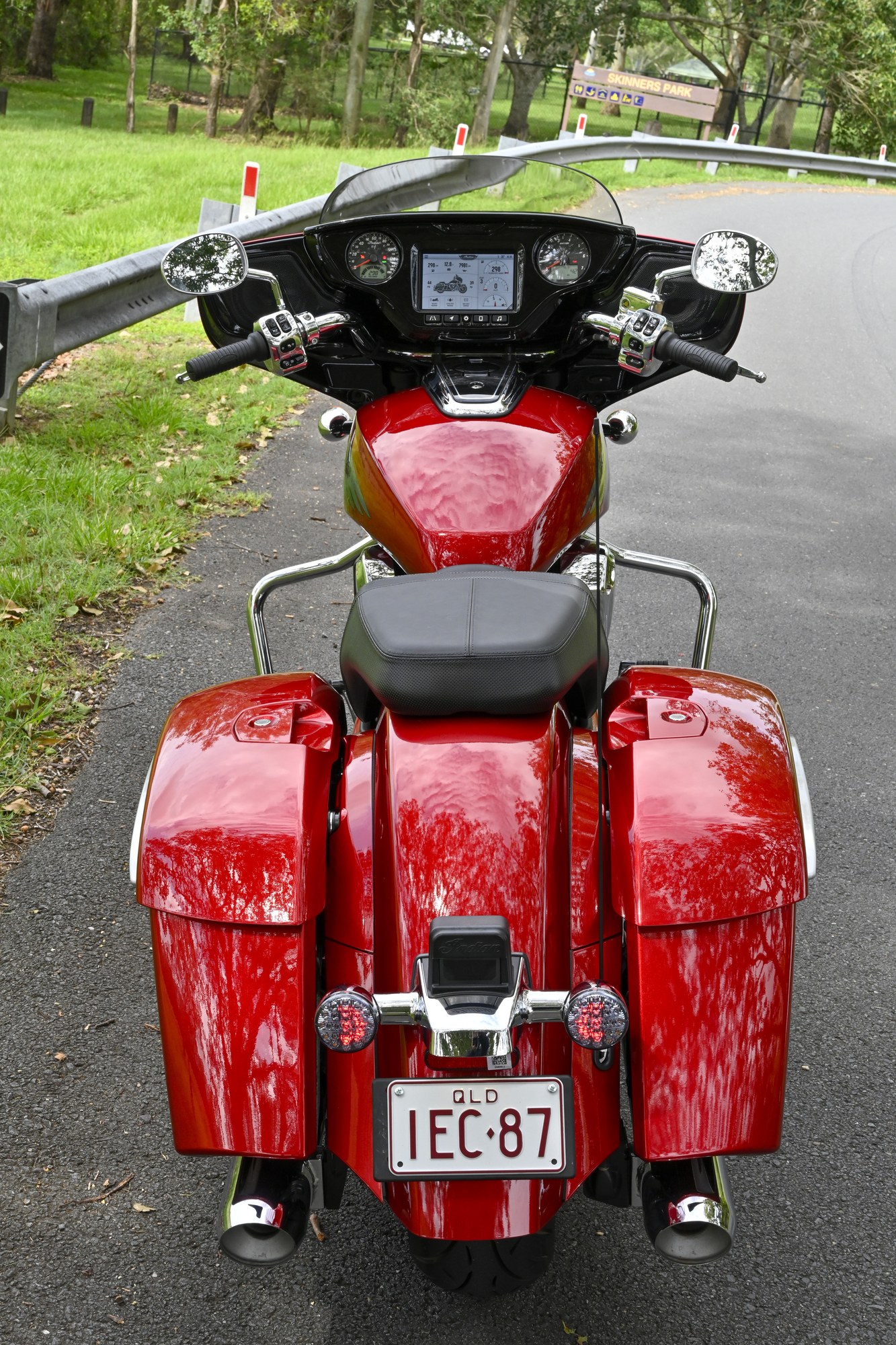
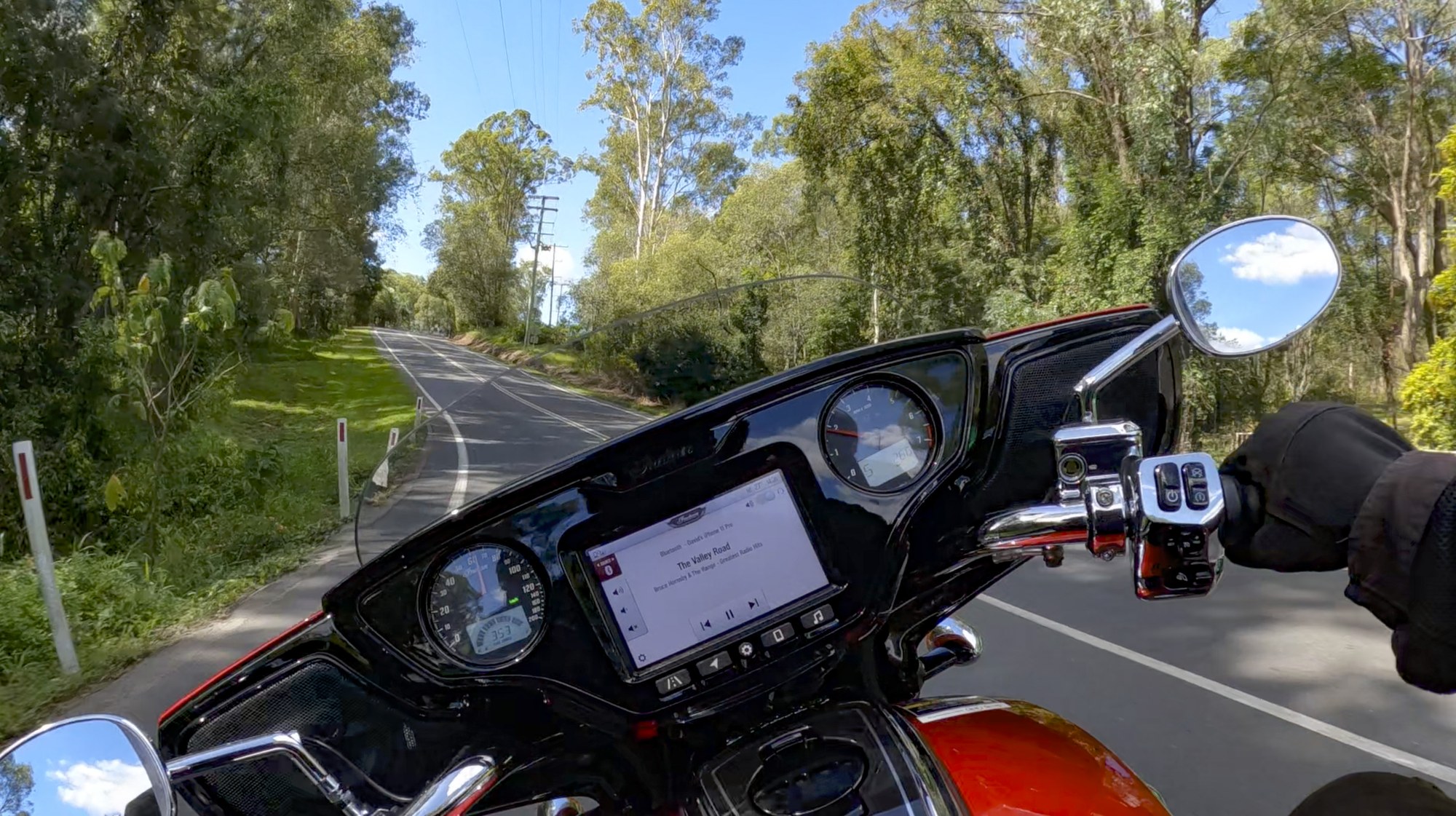
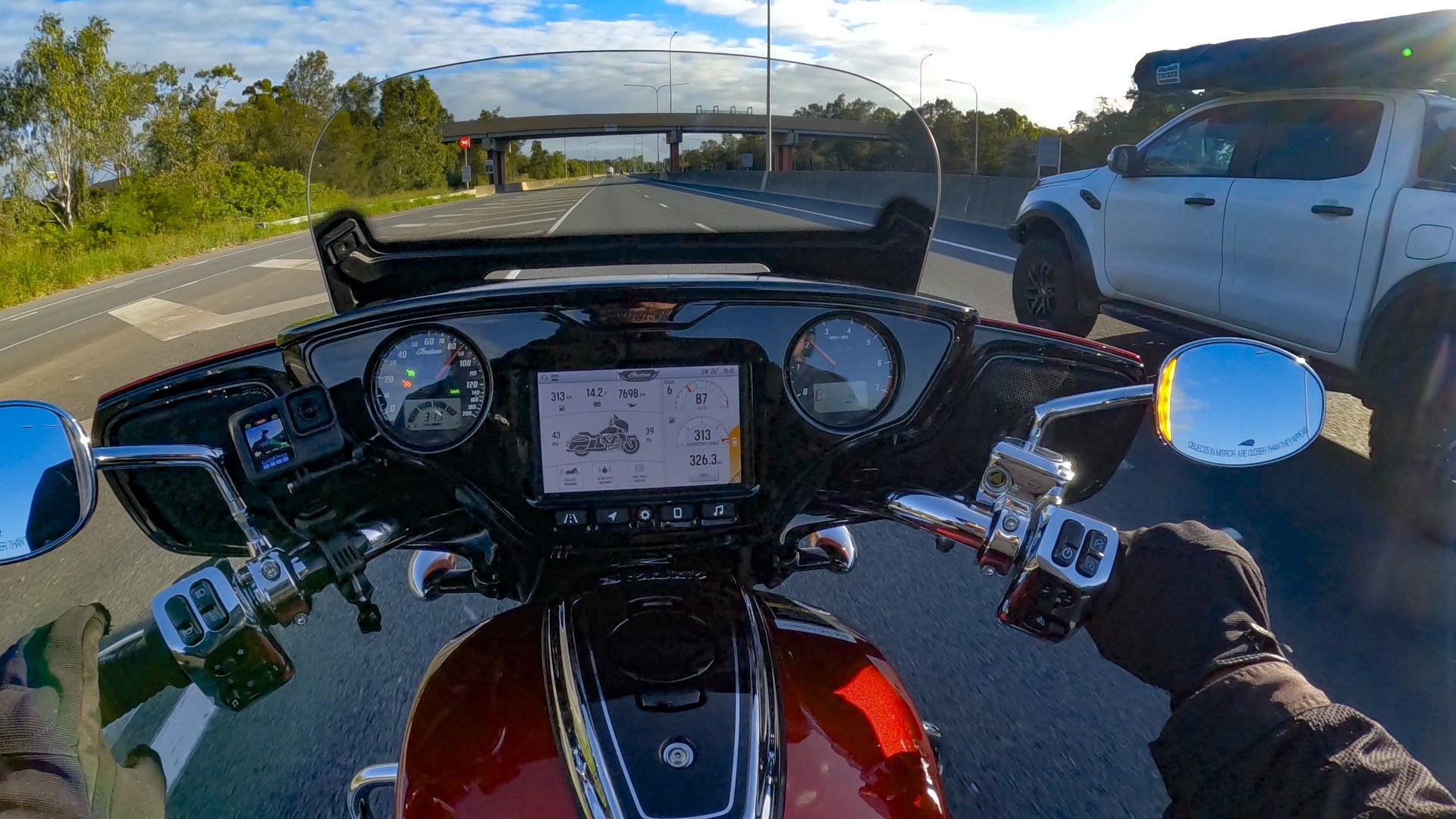
There are three riding modes available: Rain, Standard and Sport, all selectable on the fly from the seven-inch Ride Command touchscreen mounted between the combined analogue/LCD gauges on the dash. Sport was my go-to.
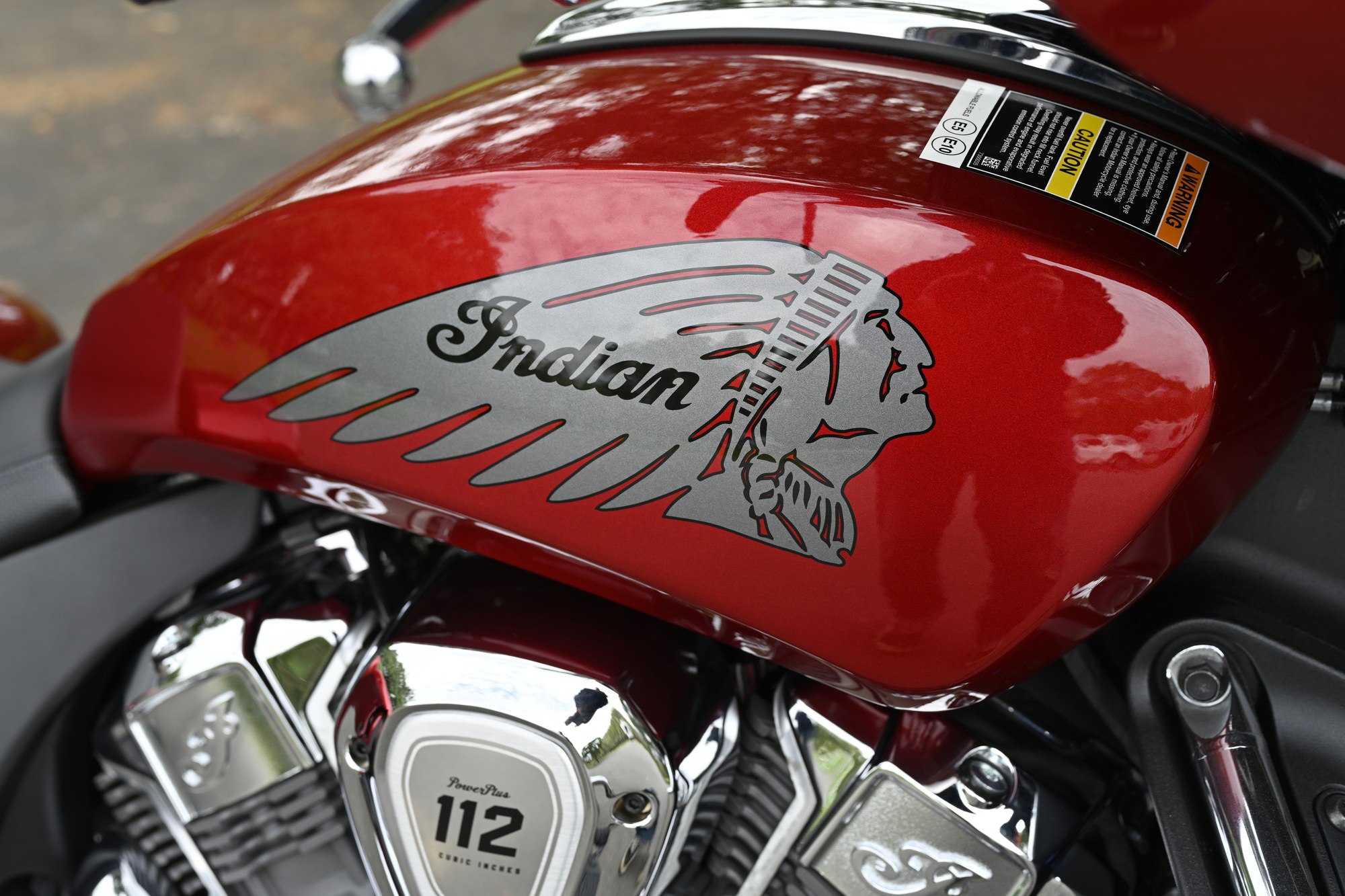
The liquid-cooled PowerPlus unit displaces 1834 cc and has a slightly oversquare bore and stroke of 110 mm × 96.5 mm, with an 11.4:1 compression ratio.
Apart from its very pleasing 122 horses and linear power delivery, it will also trundle along quite happily in top gear at 60 km/h, thanks to a healthy 181.4 Nm of torque at 3800 rpm.
The closed-loop, 52 mm dual-bore EFI delivers a crisp response — particularly in Sport mode — and it didn’t stumble or grumble at all during the test.
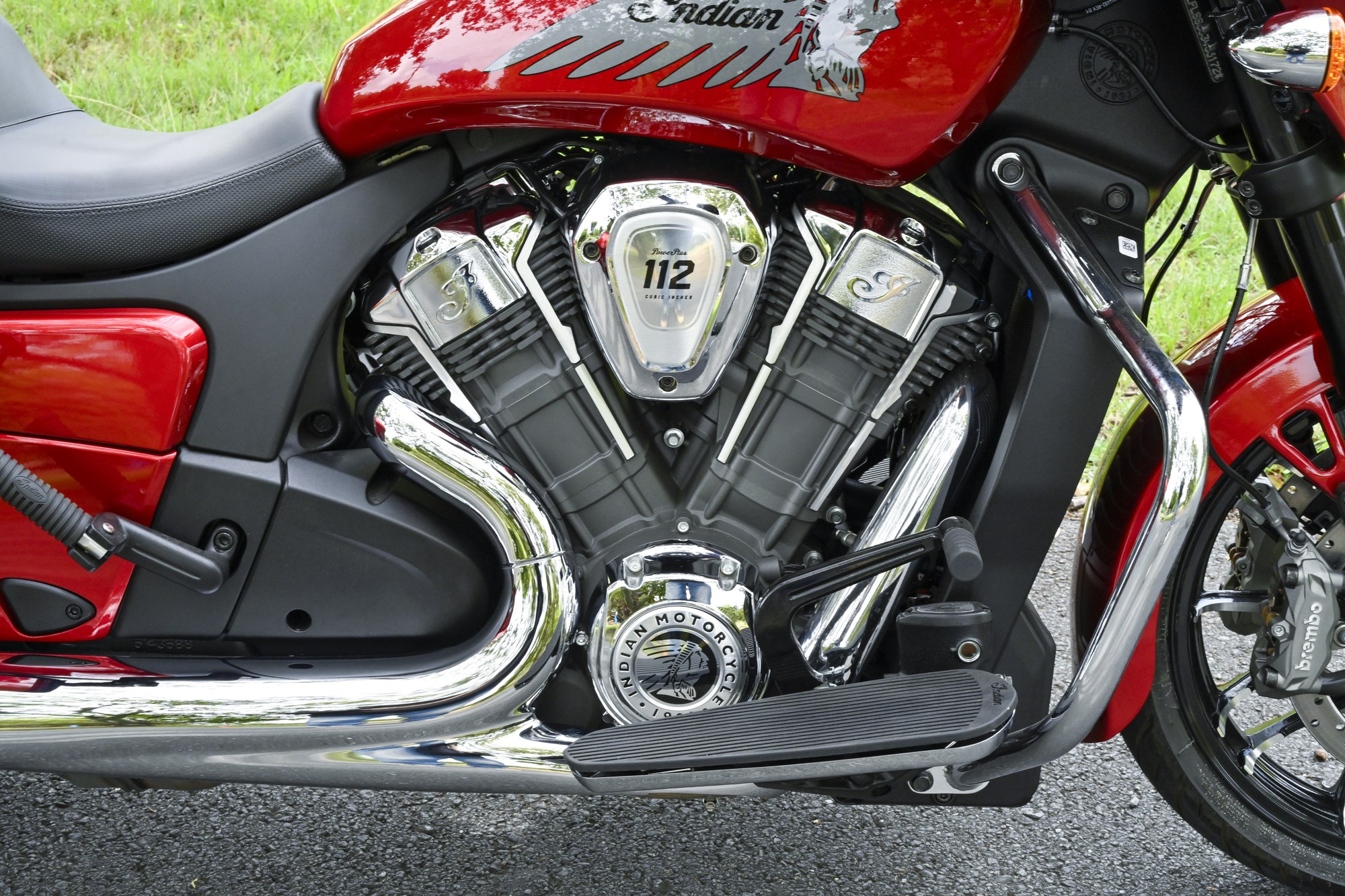
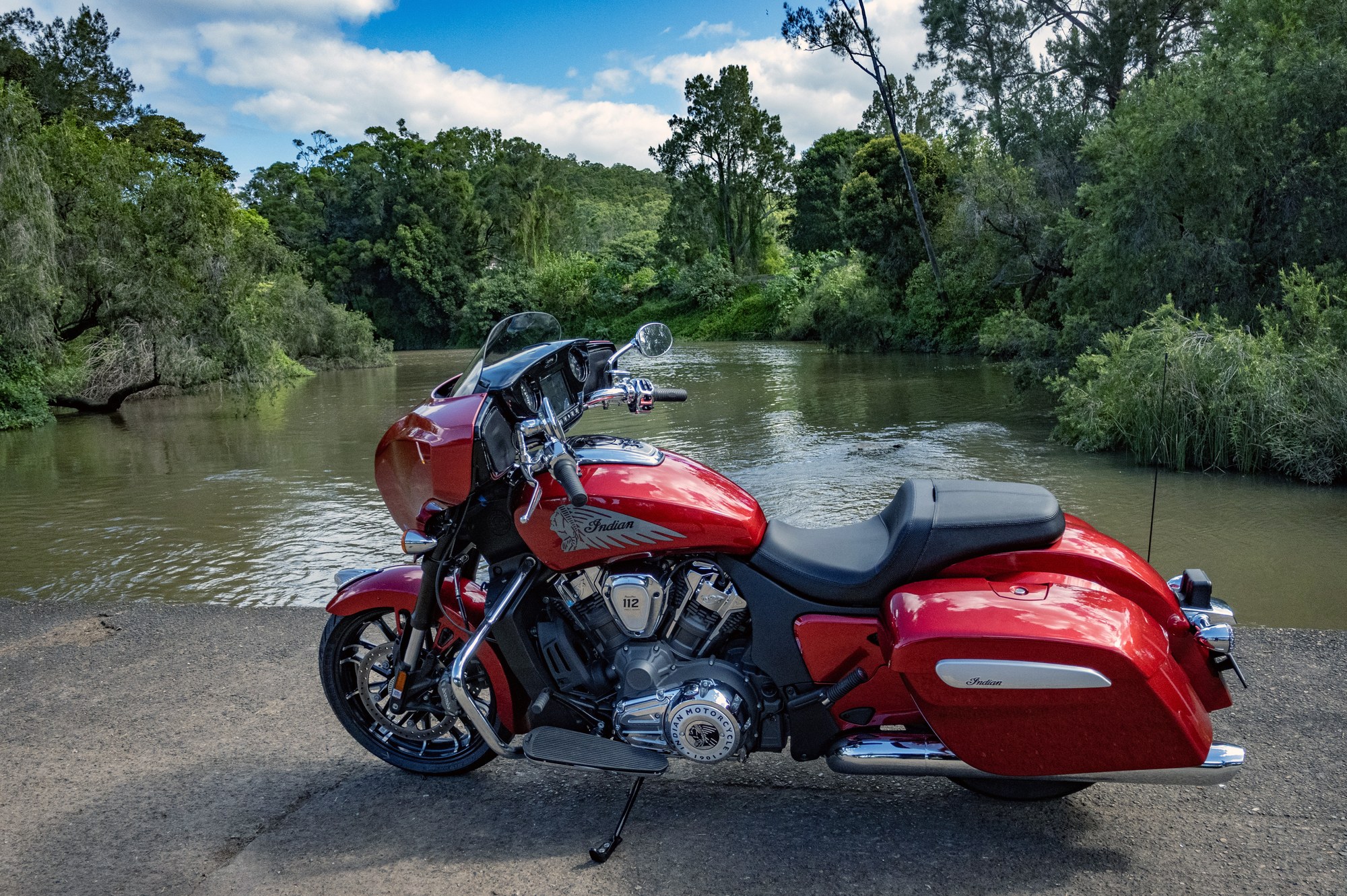
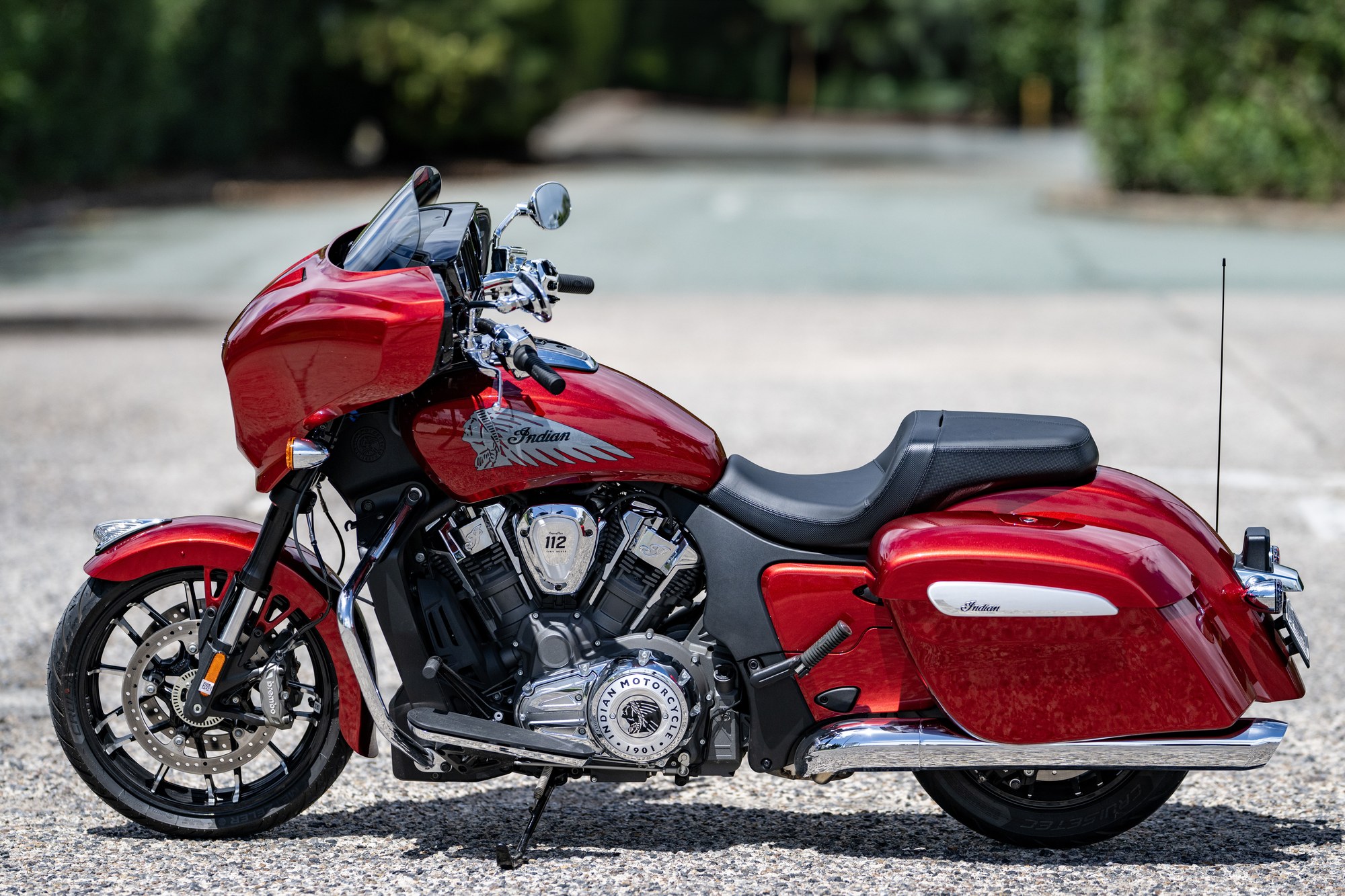
On or off the gas, the six-speed gearbox is smooth-changing and clicks into gear surely and reliably, while the cable-actuated wet multi-plate clutch is light and easy.
It means no traffic hand ache, while the gear primary drive and belt final drive (2.379:1) add to its direct-from-the-throttle-hand feel.
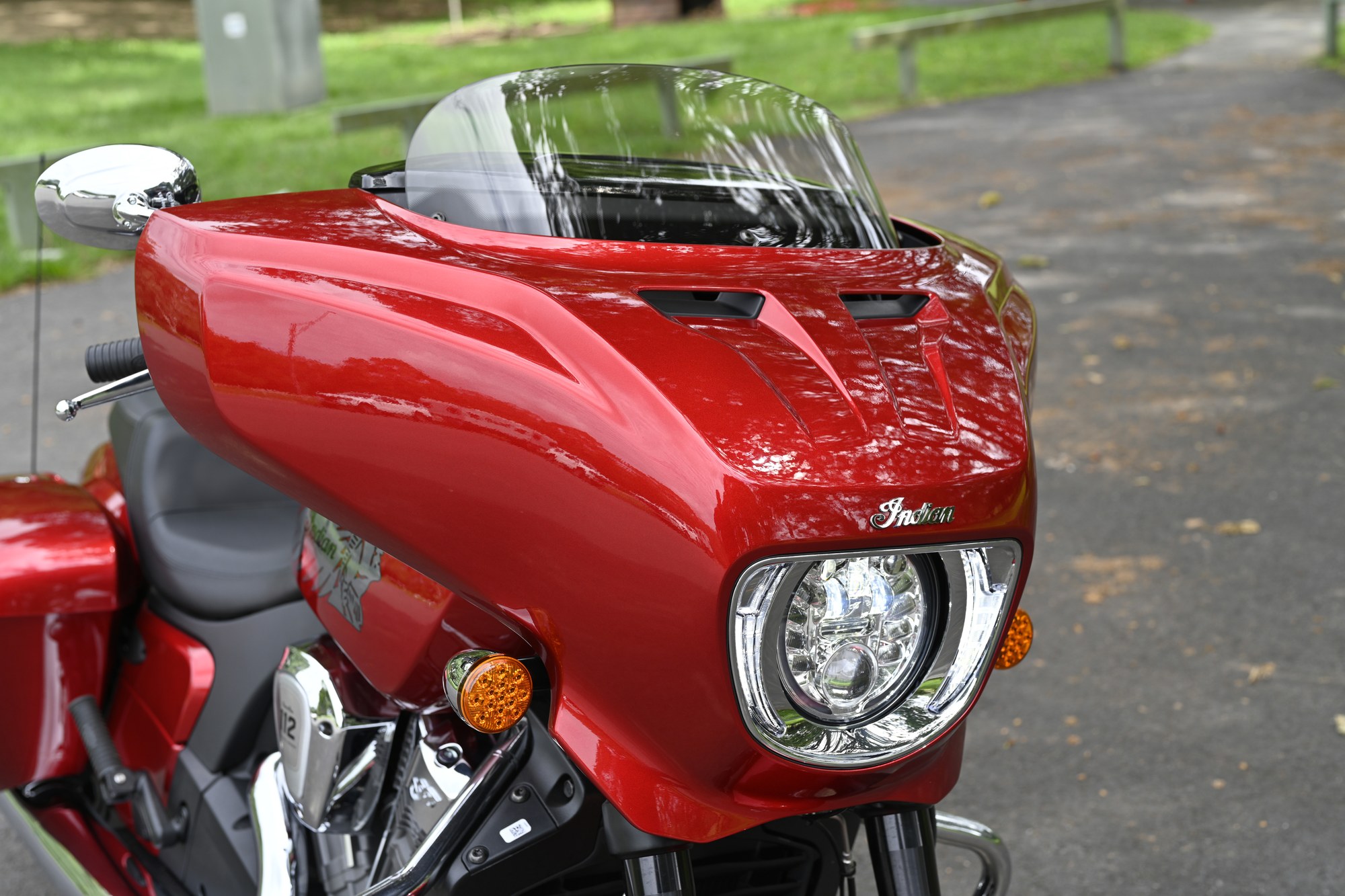
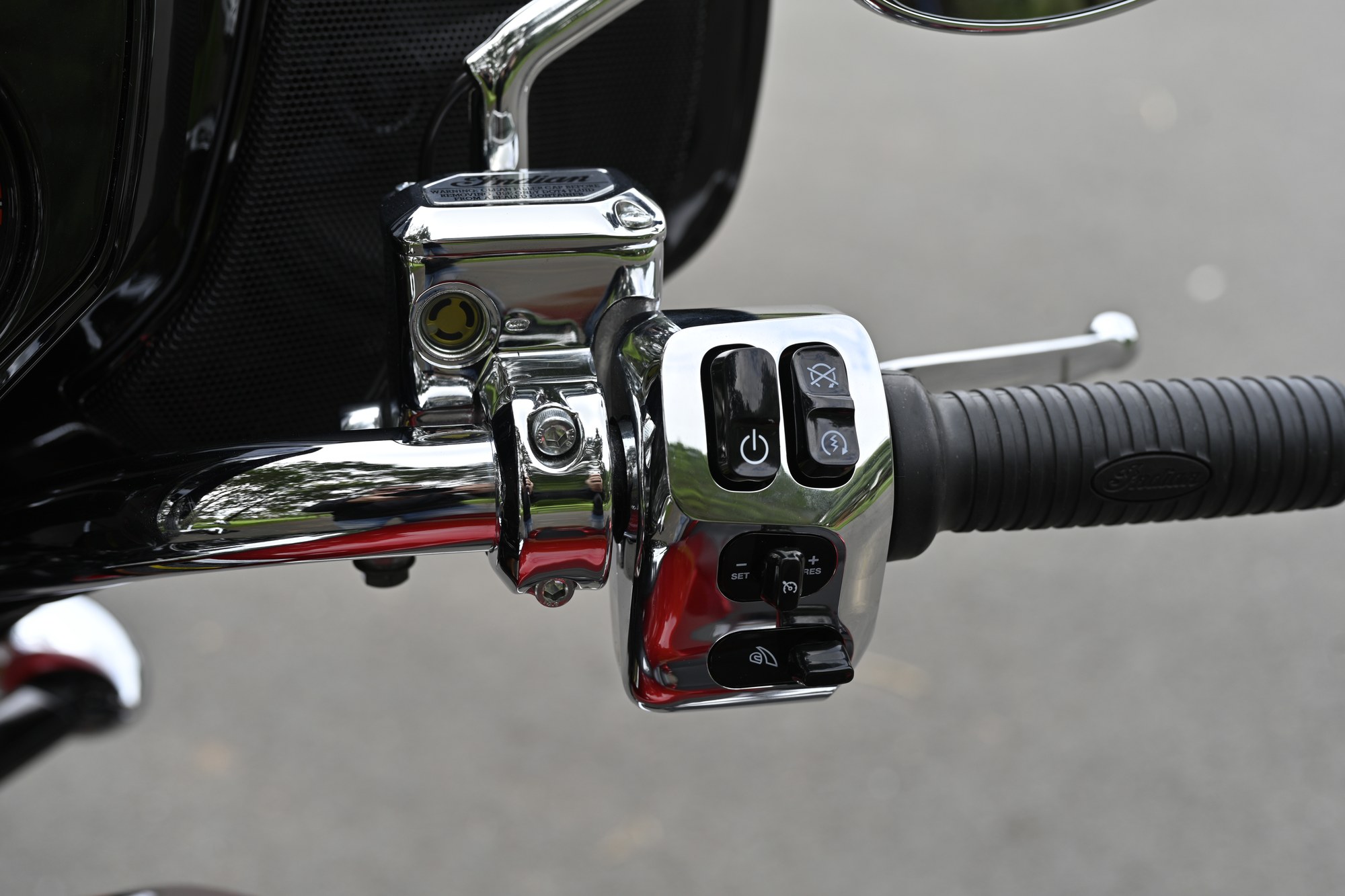
Once up to freeway speed, engaging the toggle on the right-hand switch block allows the excellent power windscreen’s height to be adjusted to the prevailing conditions. I put it all the way up, hunkered down slightly and rolled away some kays in real luxury. I think this feature should be on all baggers.
It was quite windy and, like most big-bodied baggers, I did notice some crosswind movement at 110 km/h, but it was minor, and the overall stability, streamlining and roadholding are good.
To the coast
After exiting the motorway, I headed towards the cane fields and island waterways of the coast.
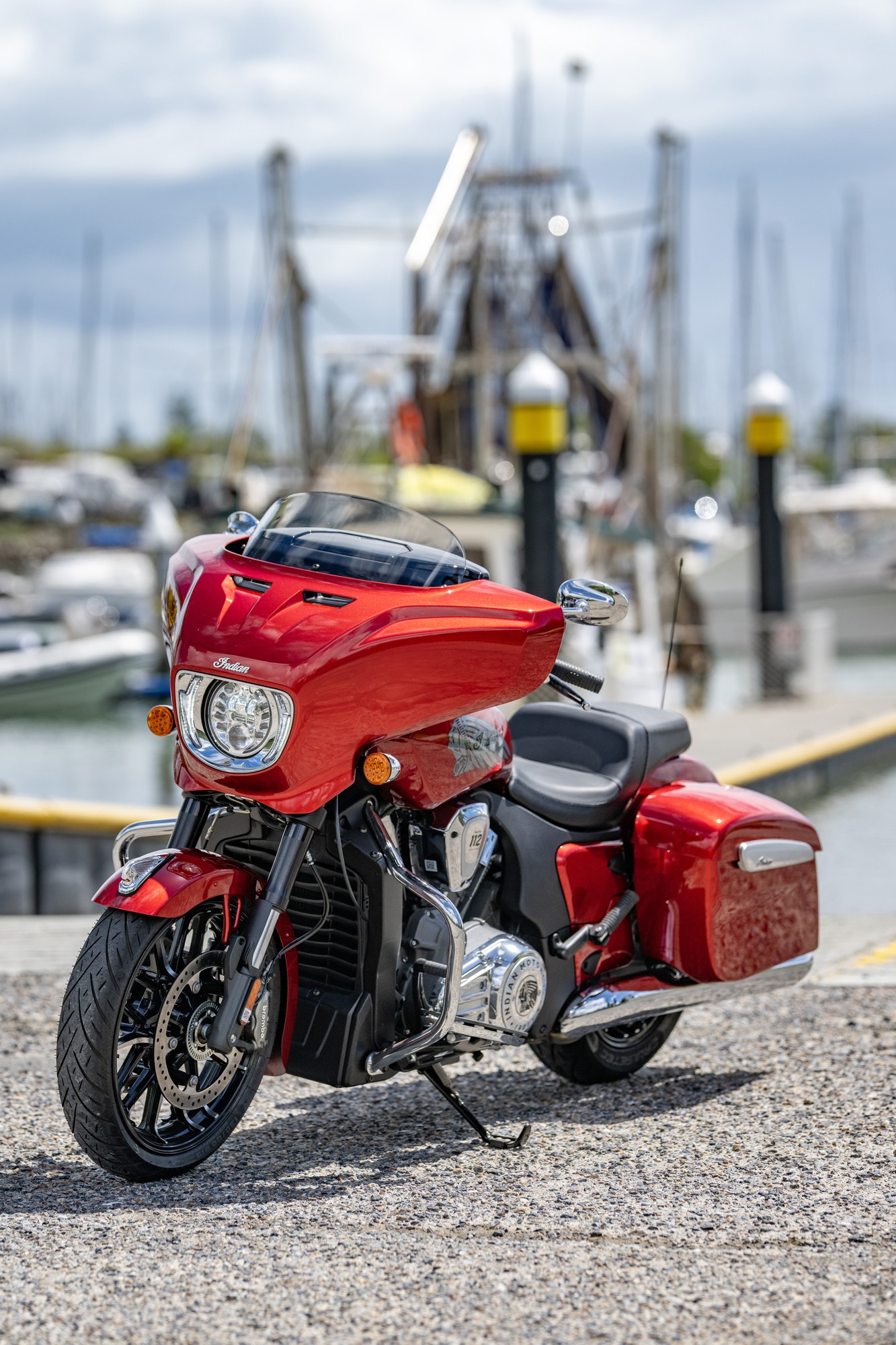
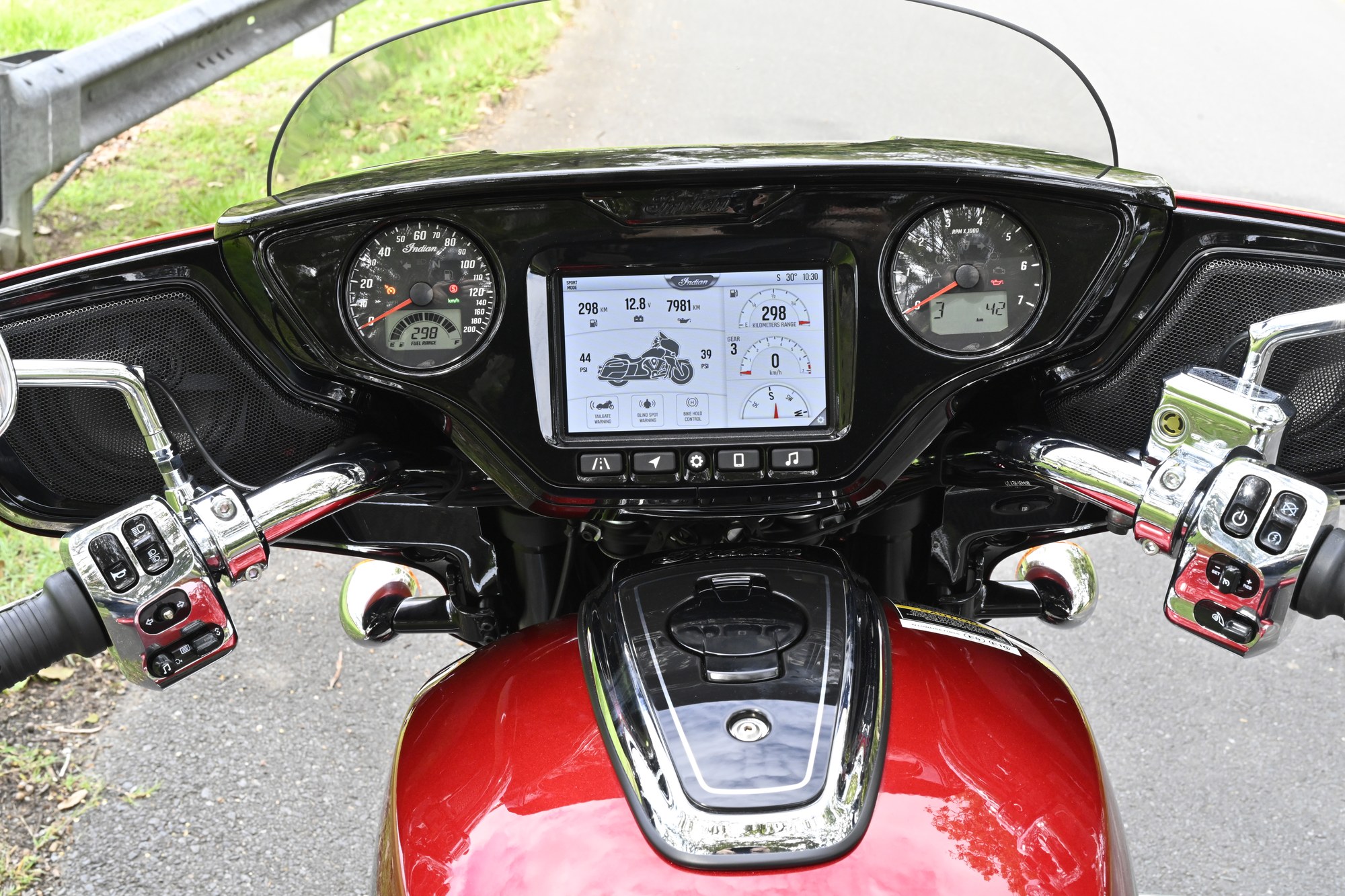
First up was a quick photo stop. Once I had a few images in the can, I started drilling down to customise the Ride Command’s infotainment options and data displays to my liking.
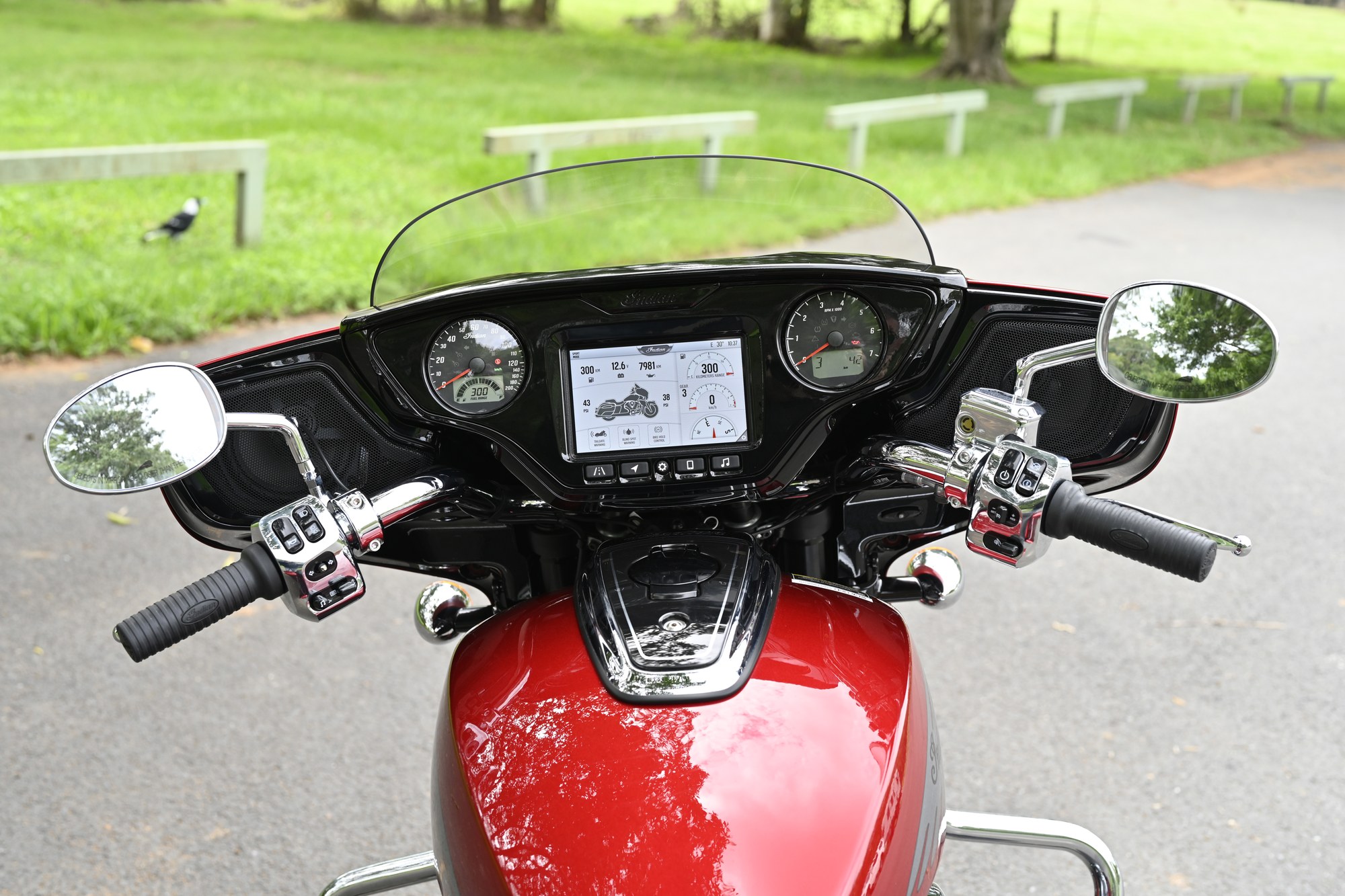
I really like the customisable widget options in this system. It offers various data snippets that can be dragged and dropped into the cascading display screens. Very clever.
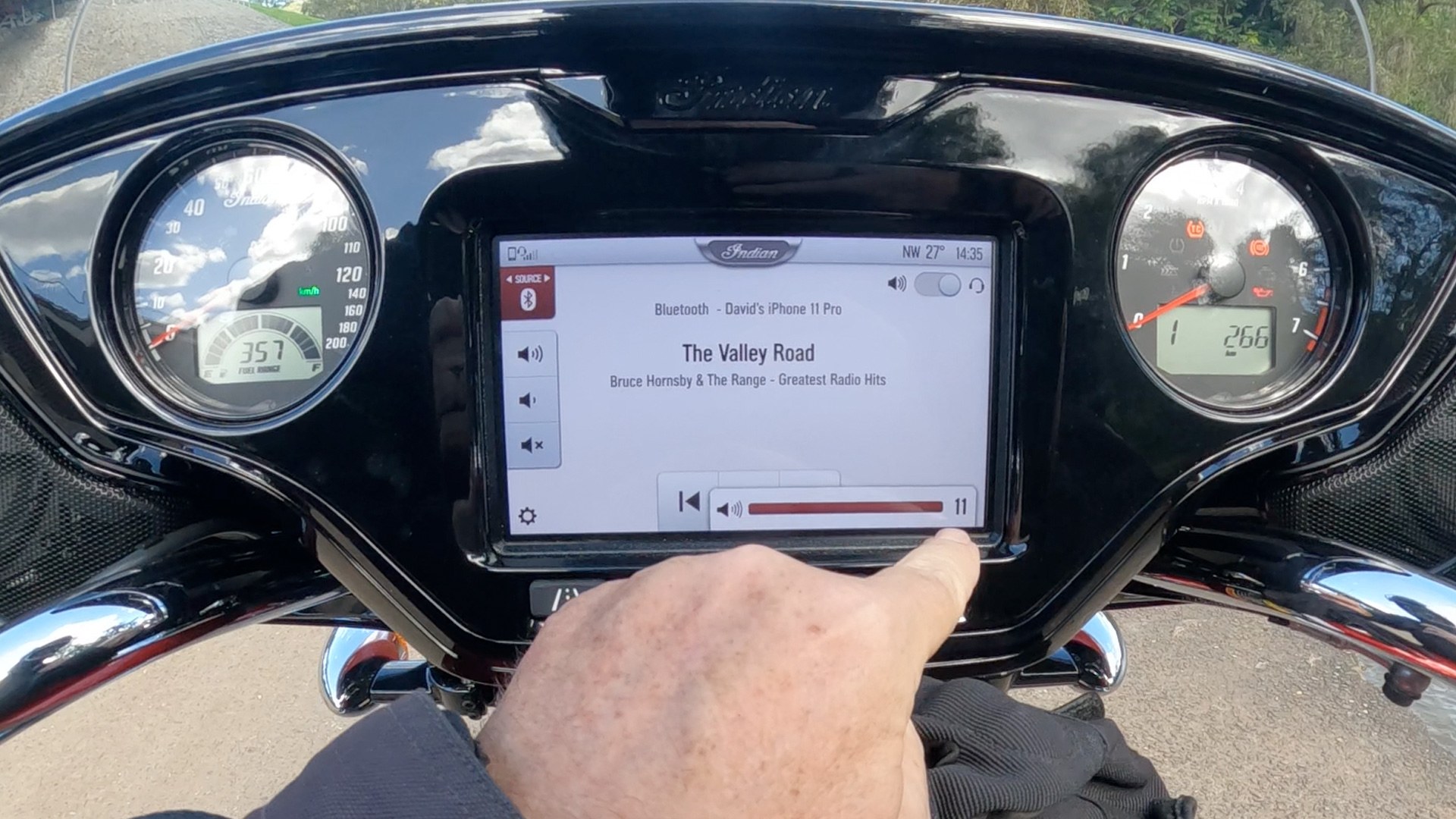
It took a few tries to connect my phone via Bluetooth, but once established it proved reliable and automatically hooked up throughout the test period, making controlling music and playlists easy. The sound can be sent to the bike’s fairing-mounted 100-watt speakers or a wireless headset; both options worked well.
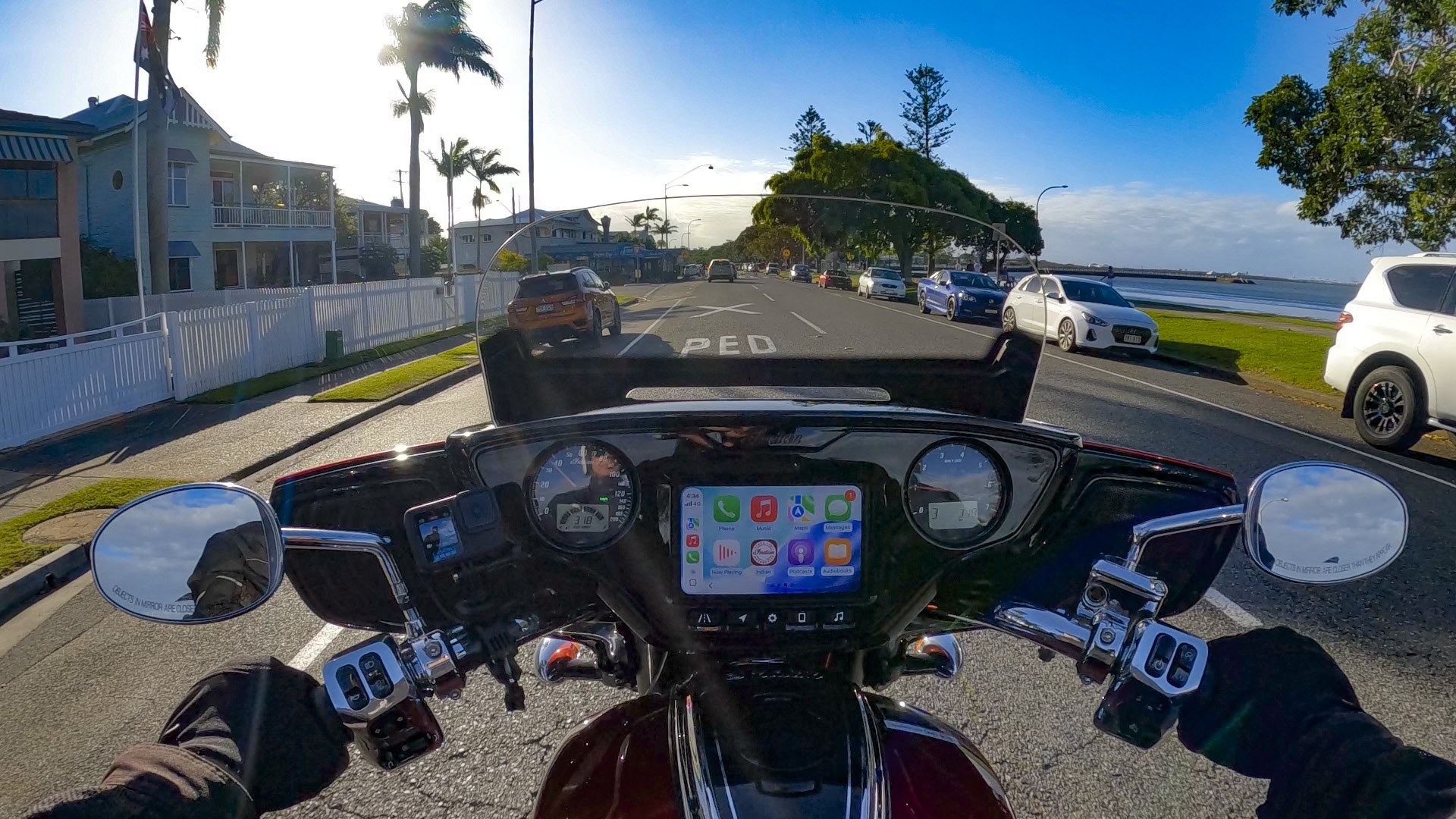
Hardwiring a device via the USB port located in the compartment atop the dashboard allows Apple CarPlay or Android Auto functions to be controlled from the touchscreen or toggles on the left-hand switch block as well. These phone options are easily switchable from the Indian’s built-in navigation and data displays.
Back on the road, a spirited run through the cane fields provided an opportunity to explore its handling and road manners.
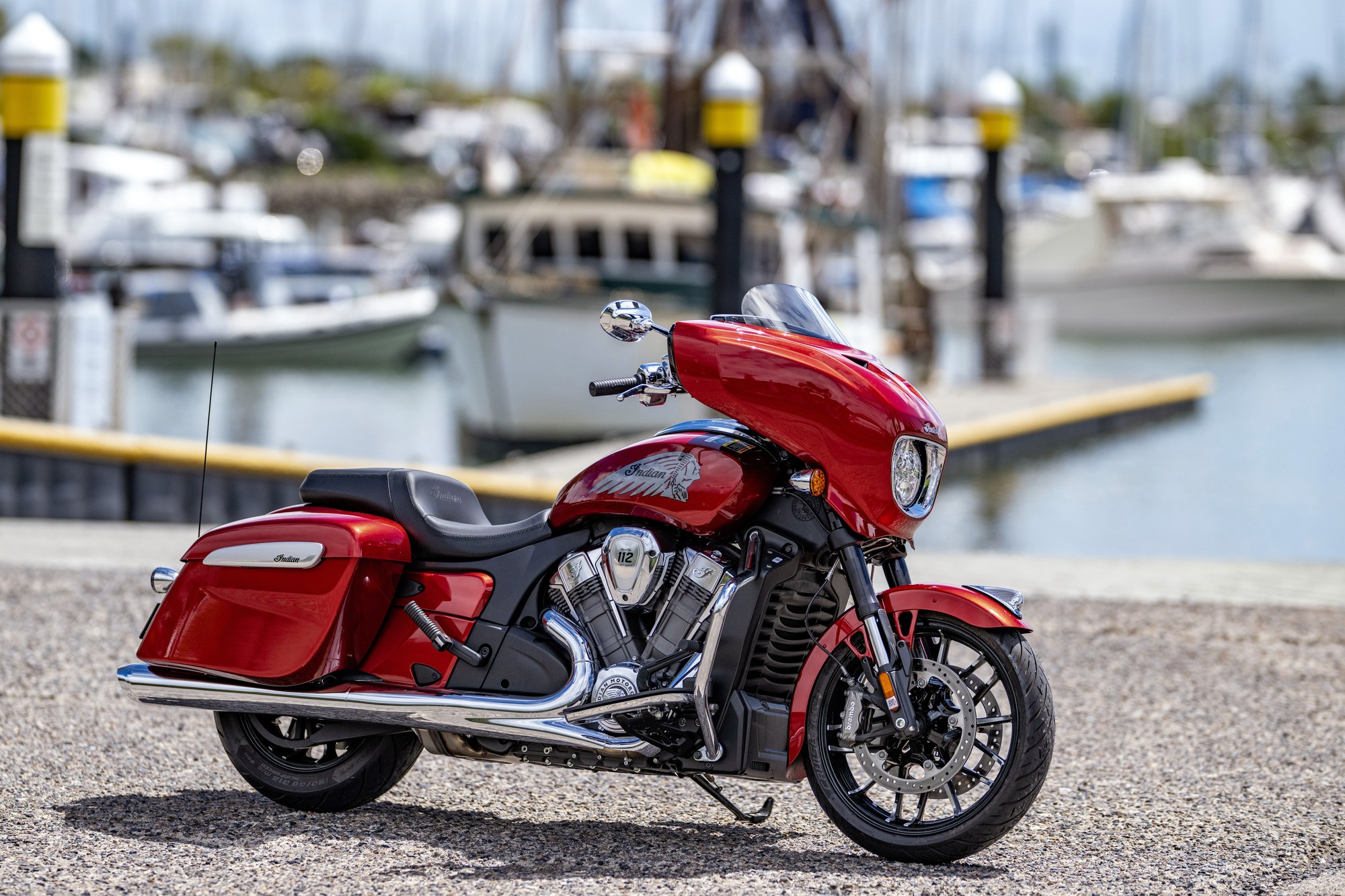
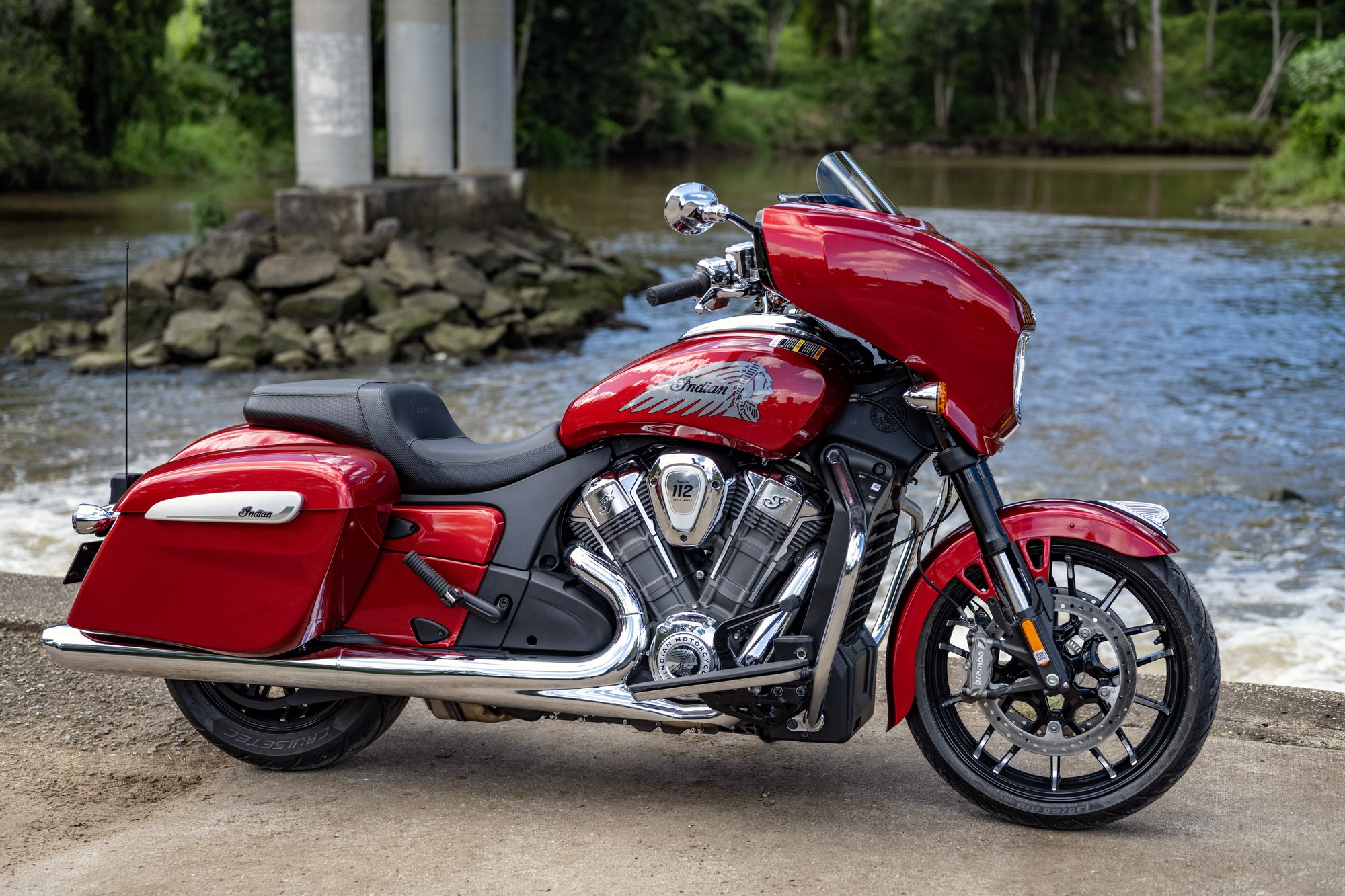
The inverted front forks offer 130 mm of travel, while the single-shock rear features hydraulic preload adjustment and 114 mm of travel. I didn’t need to adjust the preload at all during the test — it handled delightfully throughout with the standard settings.
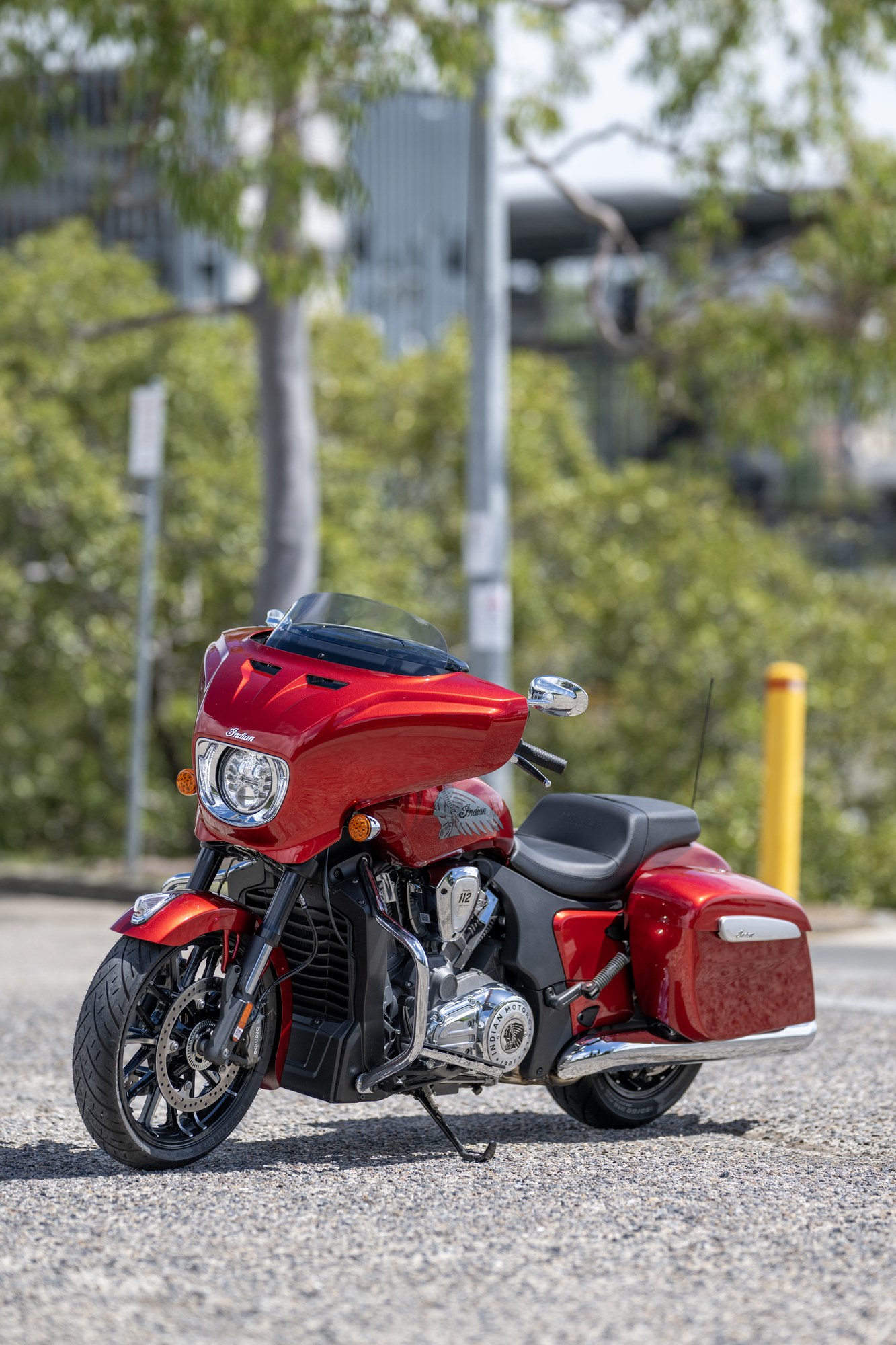
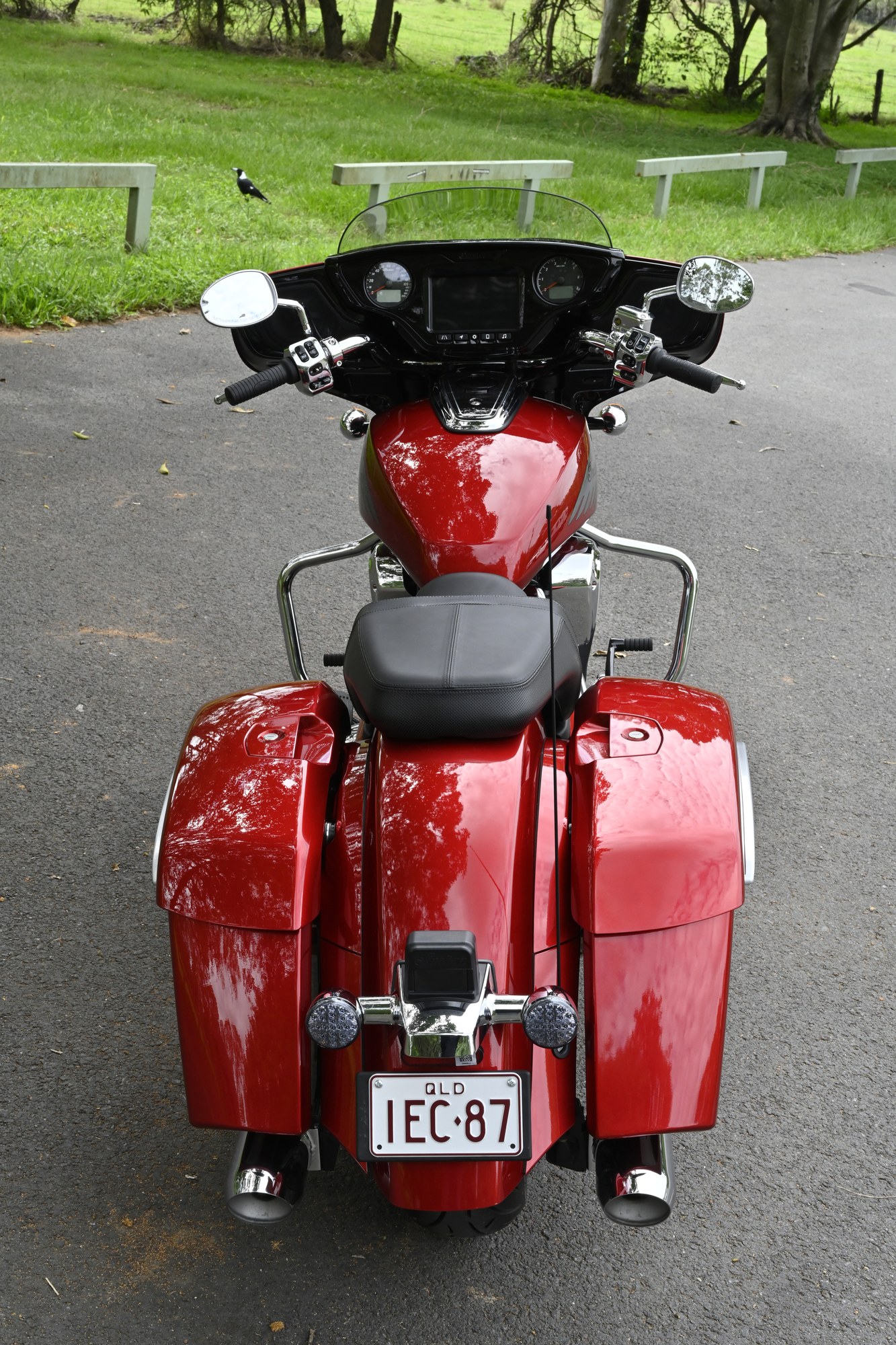
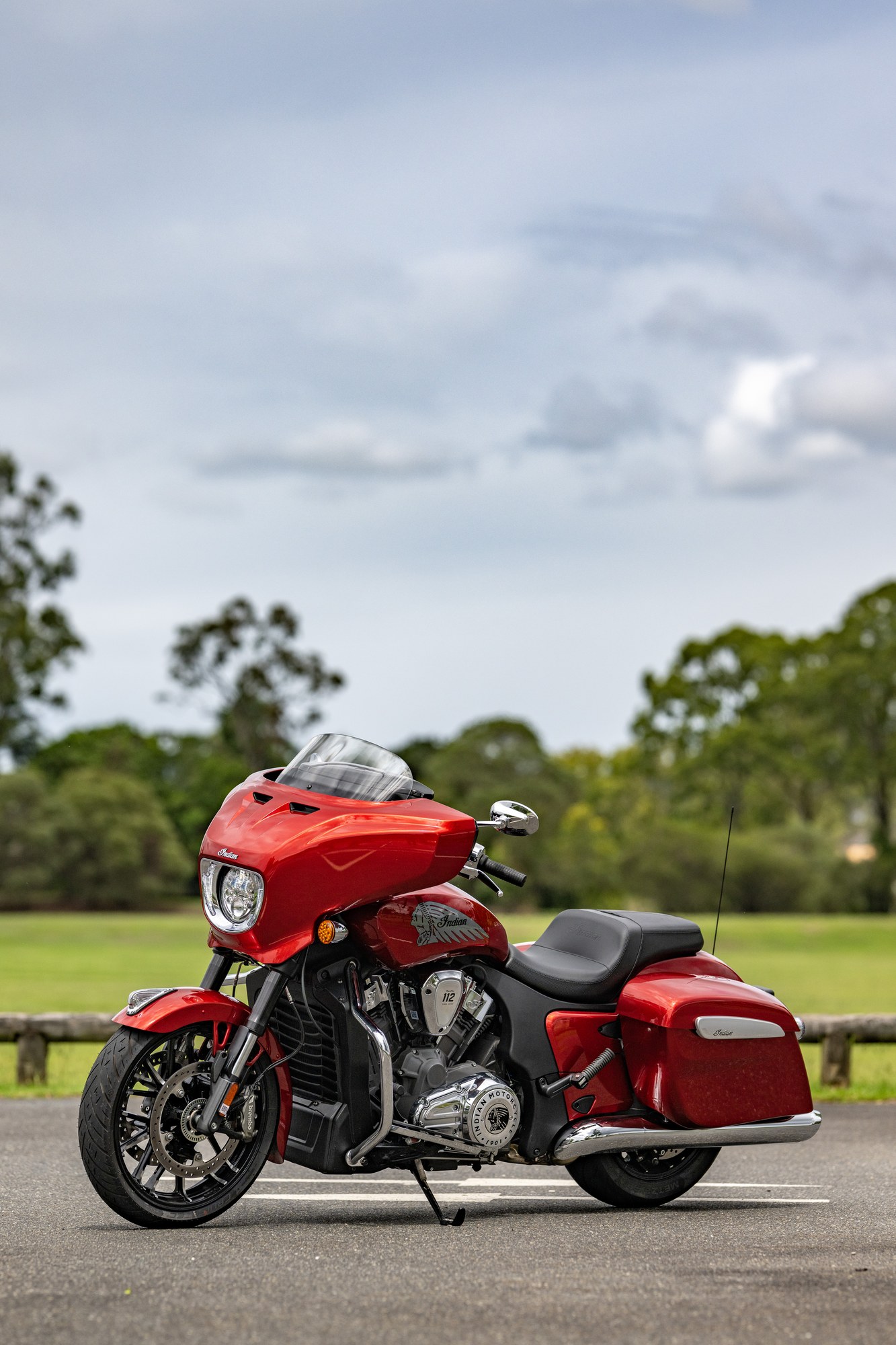
At 382 kg wet, it’s a lump to move around the garage and with feet down, but it proved surprisingly nimble once mobile.
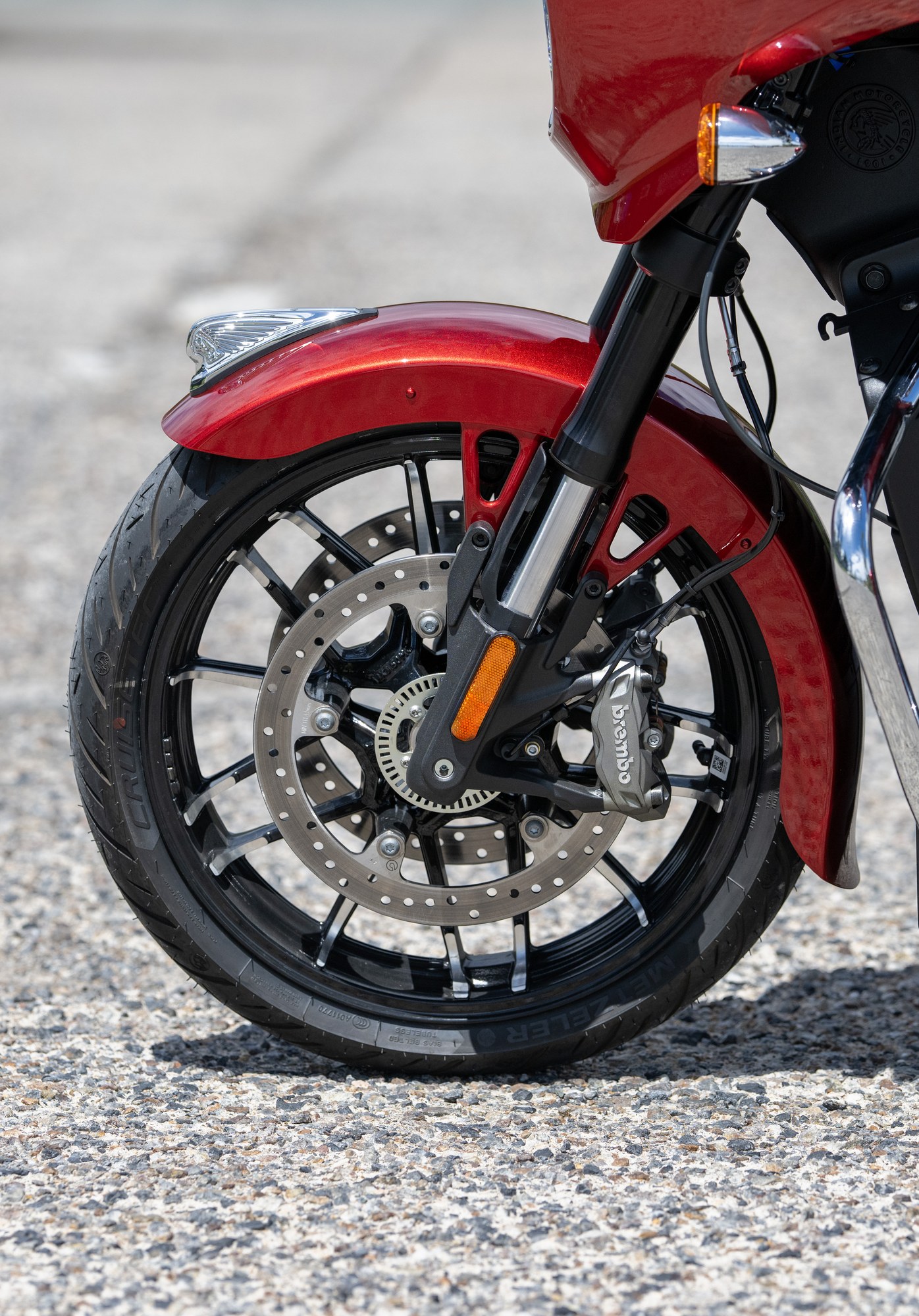
It really does tip in nicely and very confidently. The ground clearance is good for a bagger, and the lean angles are listed at 31 degrees. The 130/60B19 front and 180/60R16 rear cast-alloy wheels, with Metzeler Cruisetec rubber, no doubt contribute to its agility.
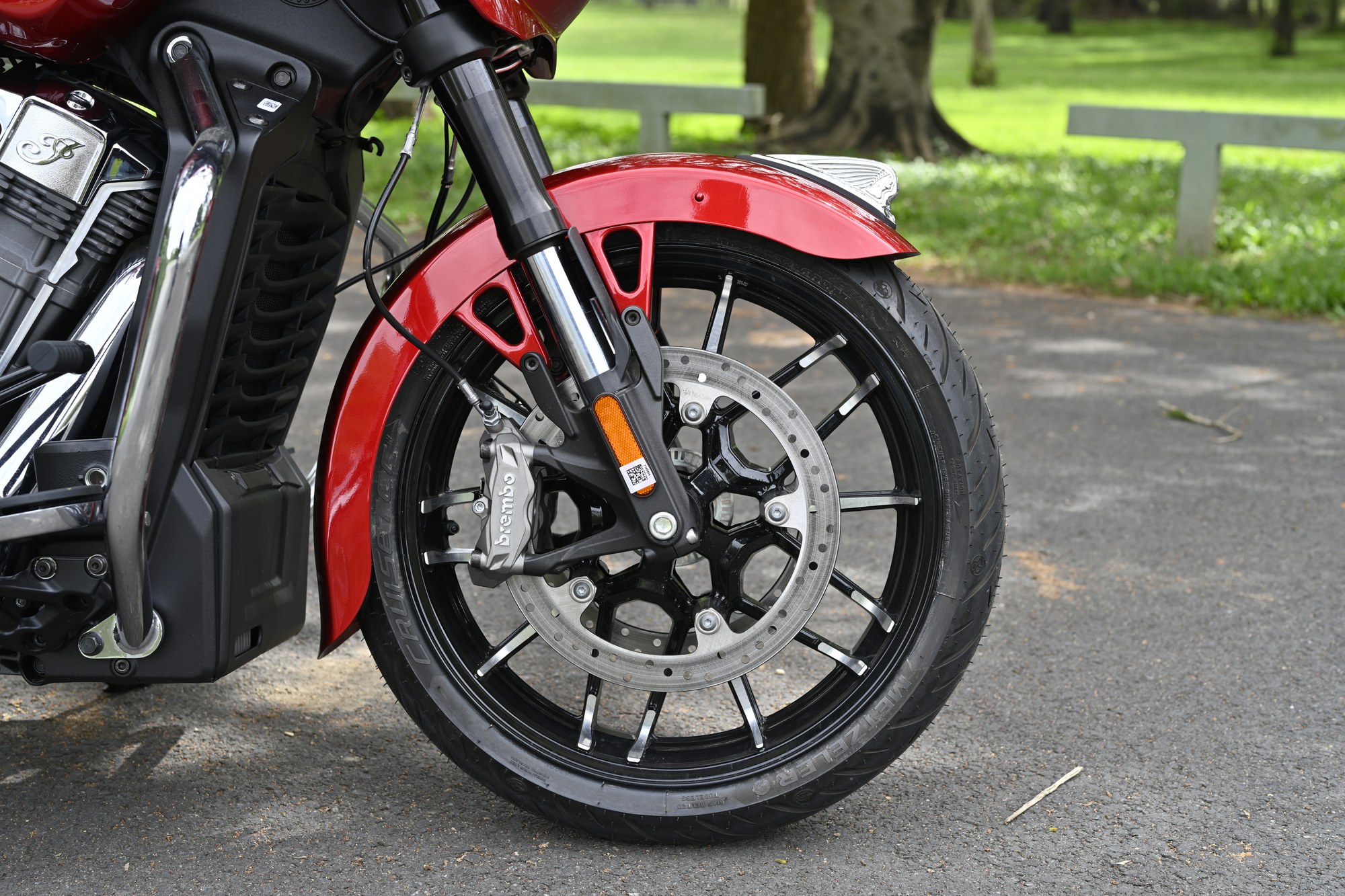
Setting up for cornering is also very pleasing. The linked Brembo calipers on dual semi-floating rotors up front and a single rotor at the rear have a raft of smart ABS and ride-safety enhancement technologies, and need only one finger to operate confidently.
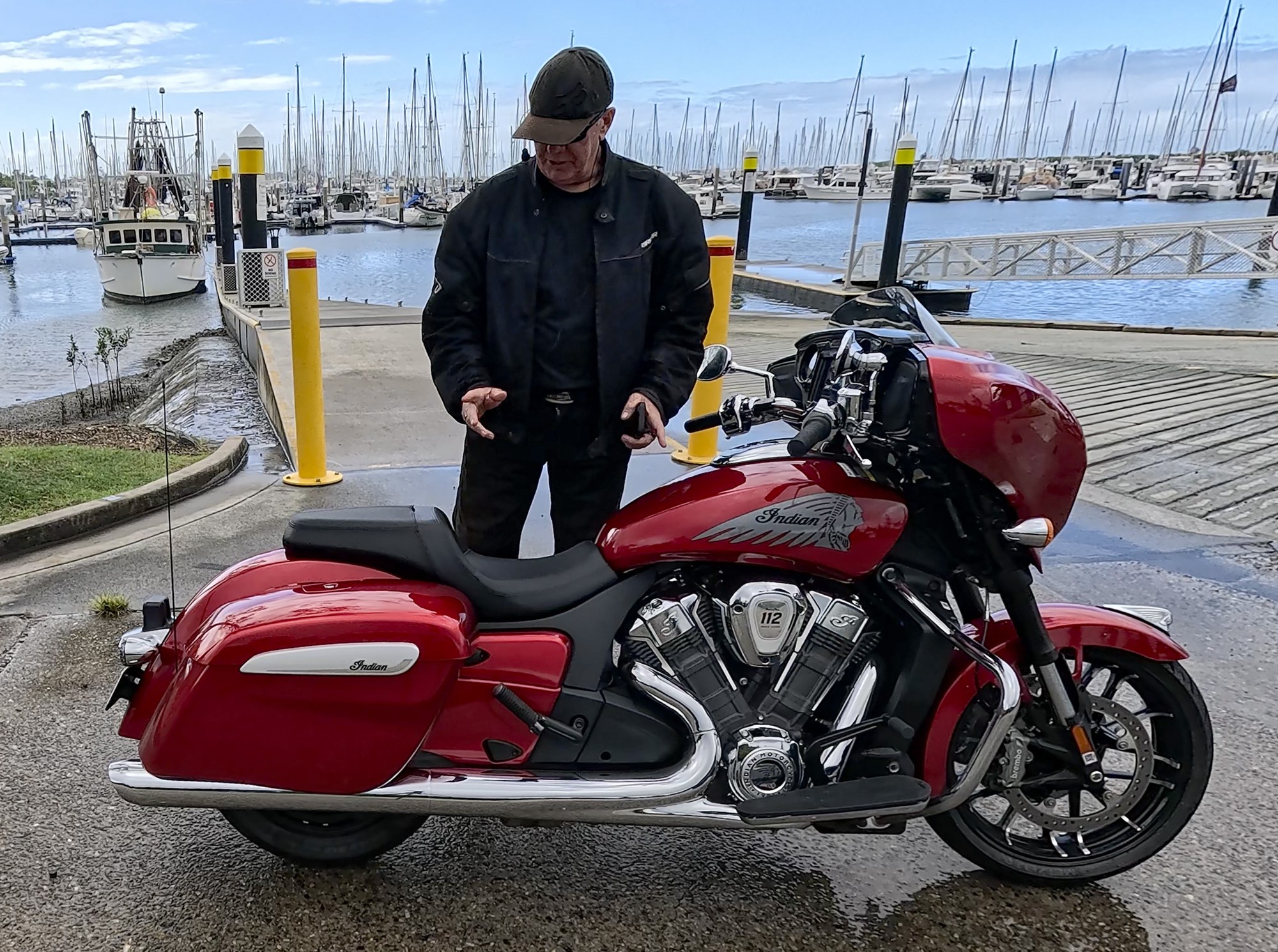
After a lap of the ‘cane field grand prix’, I headed home via the freeway and switched back to Standard riding mode, which gives a noticeably more relaxed throttle response and cruising manner.
I got back to base with just under 300 km on the clock and could easily have gone for another 300. The 22.7-litre tank handled the trip with plenty to spare.
In fact, I didn’t even need a stand-up leg stretch or bum break at the traffic lights at the end of my local off-ramp.
The saddle is very good, with plenty of pillion room, and the big footboards give plenty of options for moving around on longer runs. Putting feet up on the engine bars also gives a chance to stretch the legs on the go.
It’s a wonderful big-distance eater.
More testing
Over the ensuing days, I took the Chieftain over some of my favourite twisty loops and did some open-country touring around the Scenic Rim region.
I thoroughly enjoyed every kilometre of it. The more I rode the motorcycle, the more I liked it.
I did plenty of city riding with downtown photo stops too — and dealt with the usual number of passers-by who wanted to engage or ask questions about the latest Indians.
“Yes, they have been remaking them since 2014. Yes, it does go as good as it looks.” I must have spouted some variation of that any number of times.
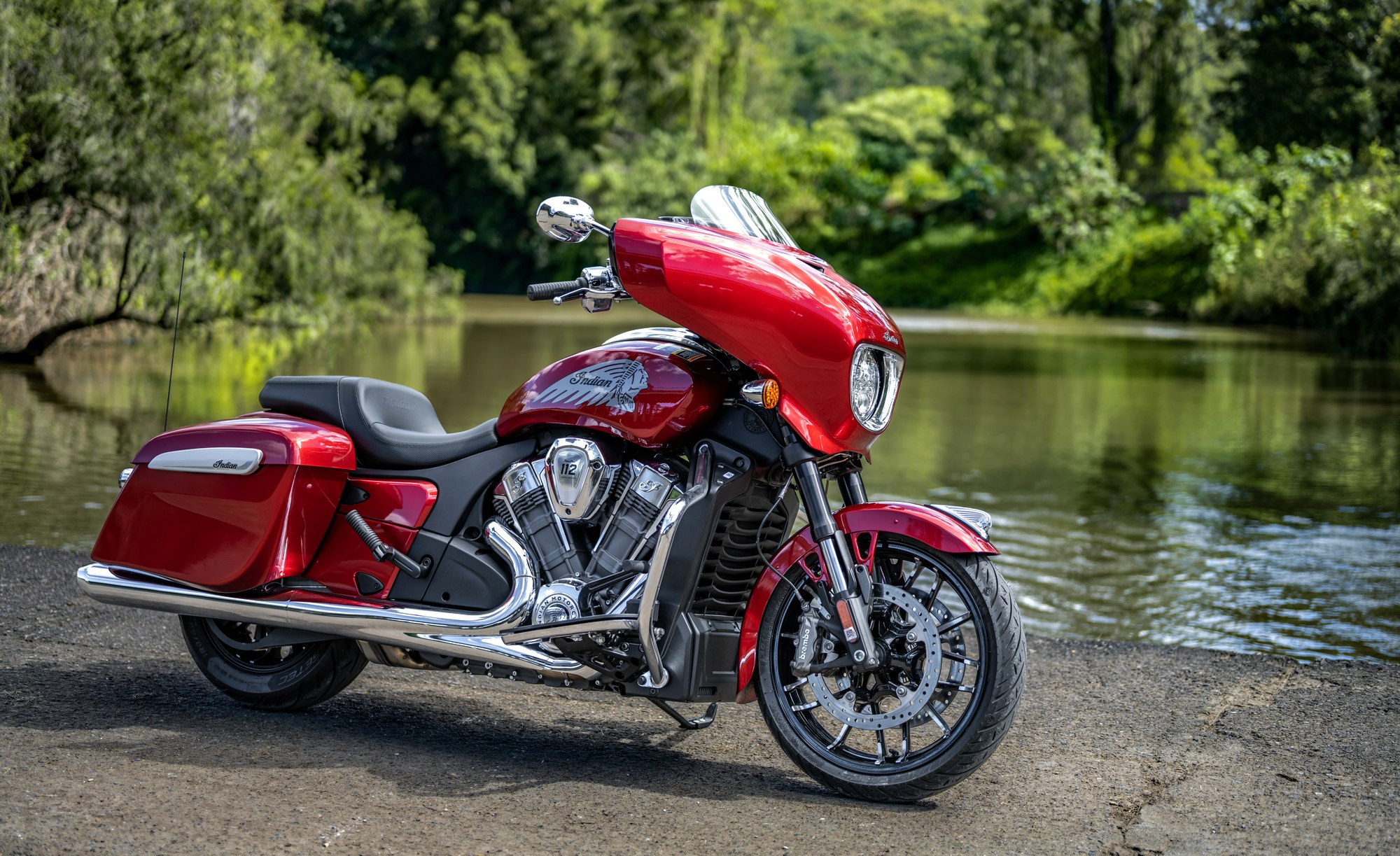
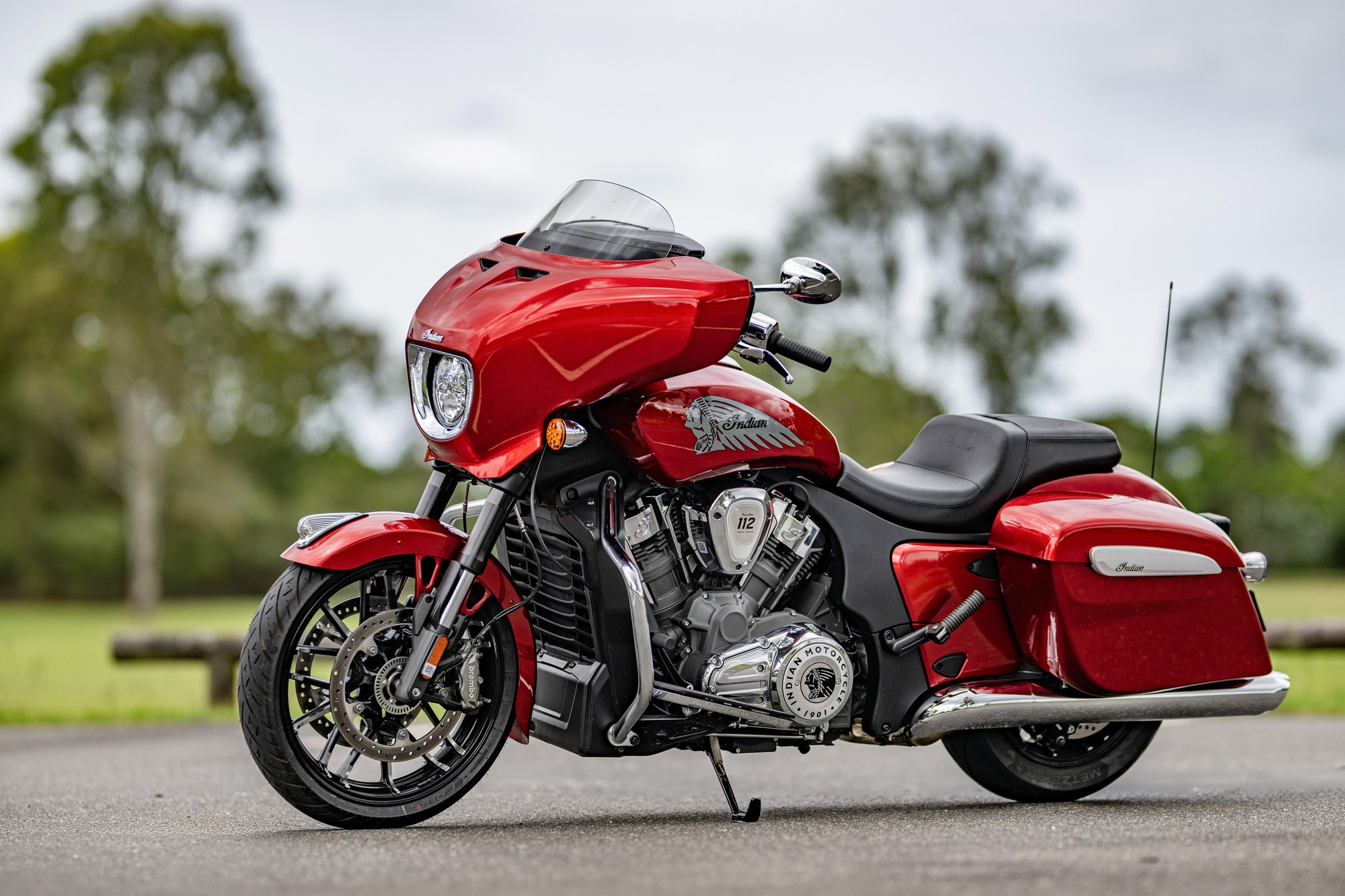
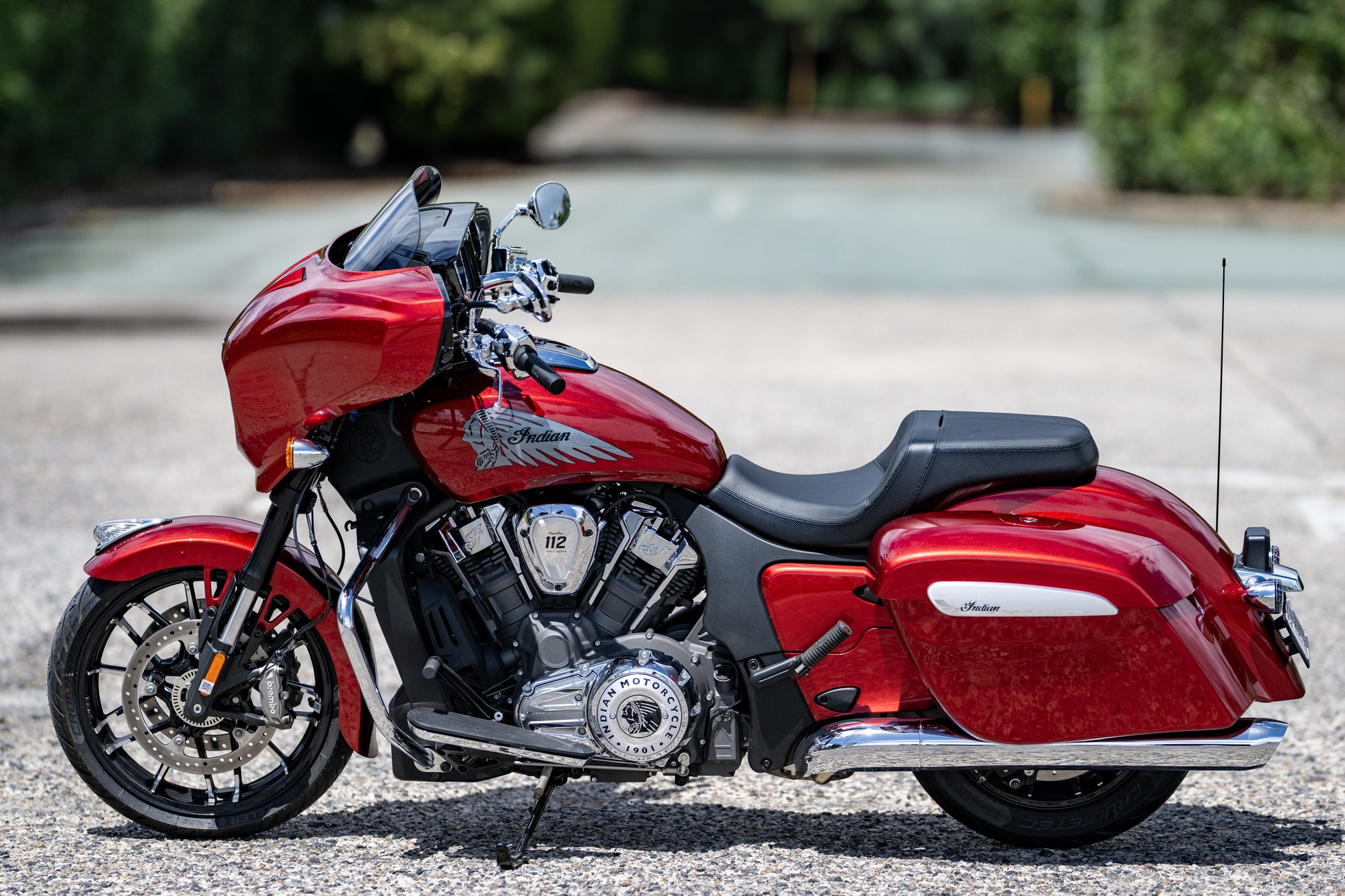
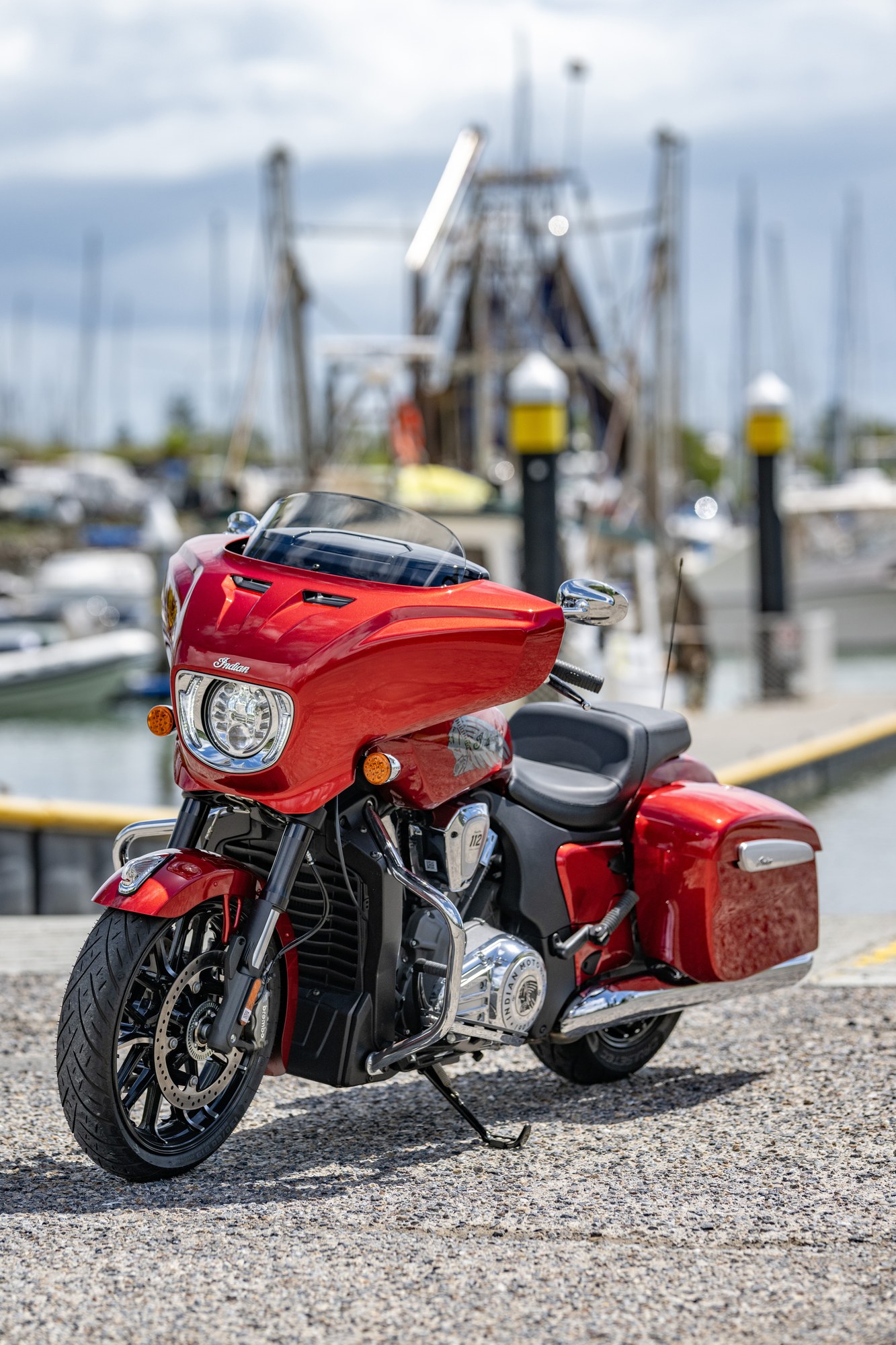
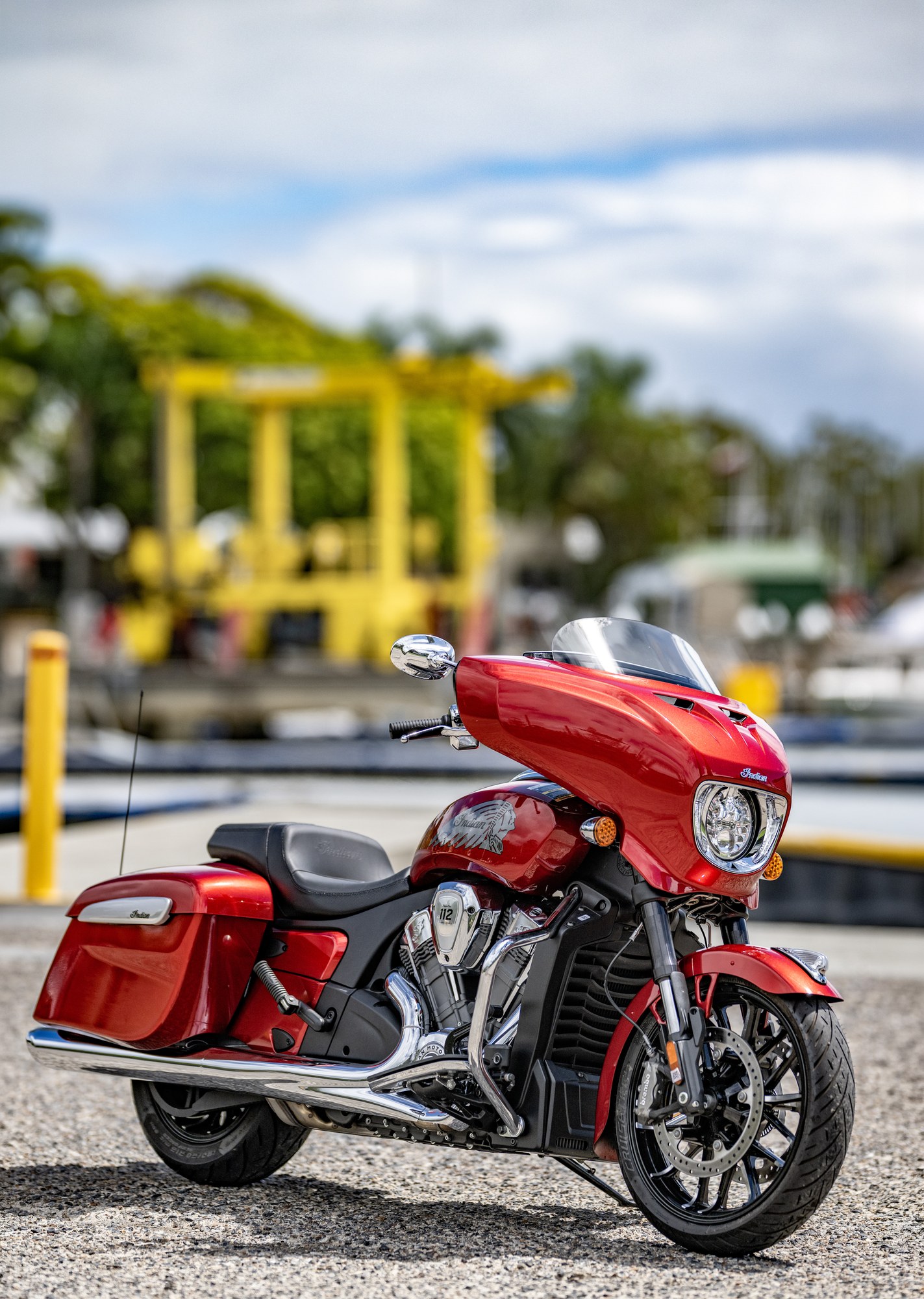
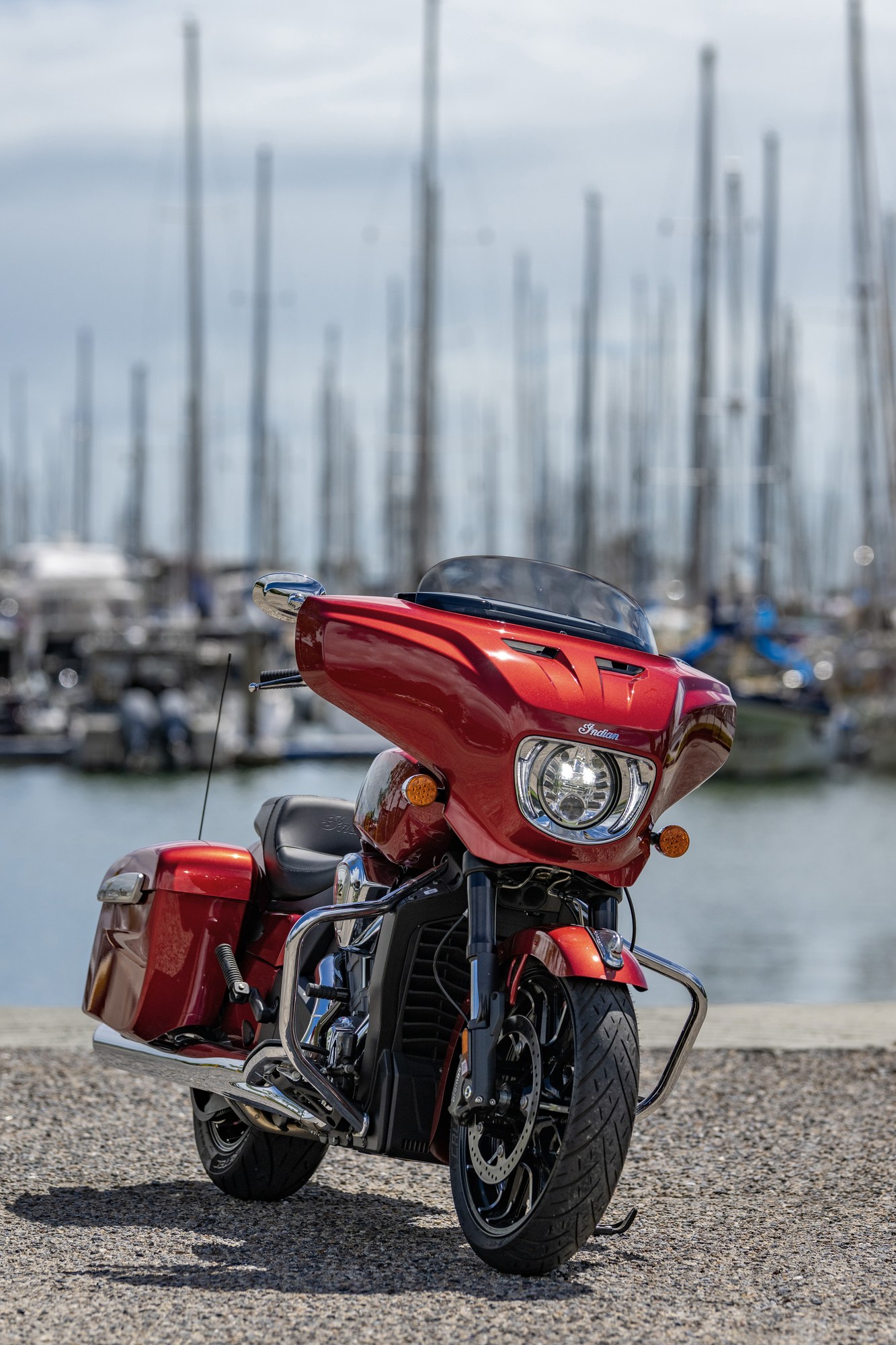
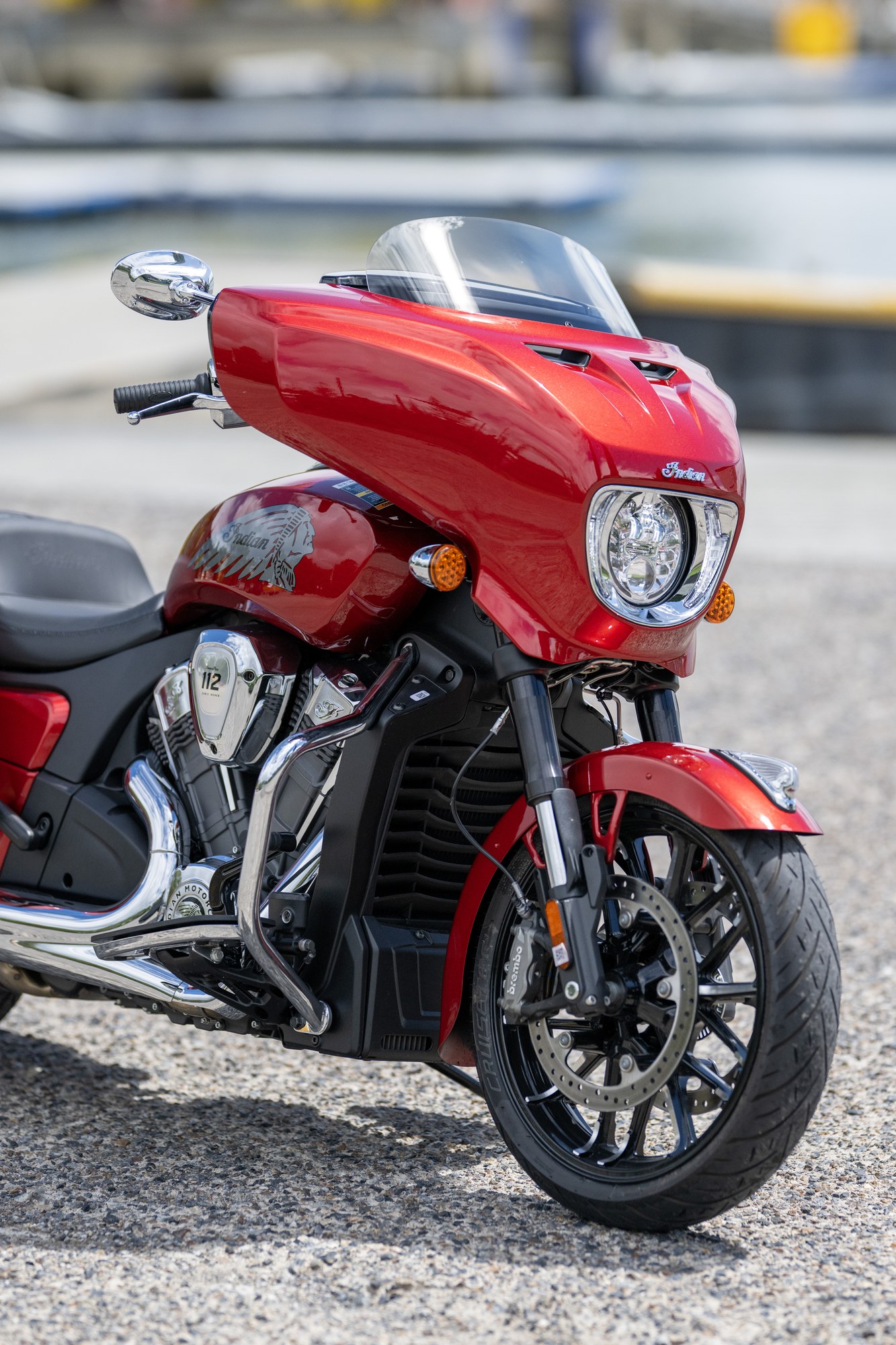
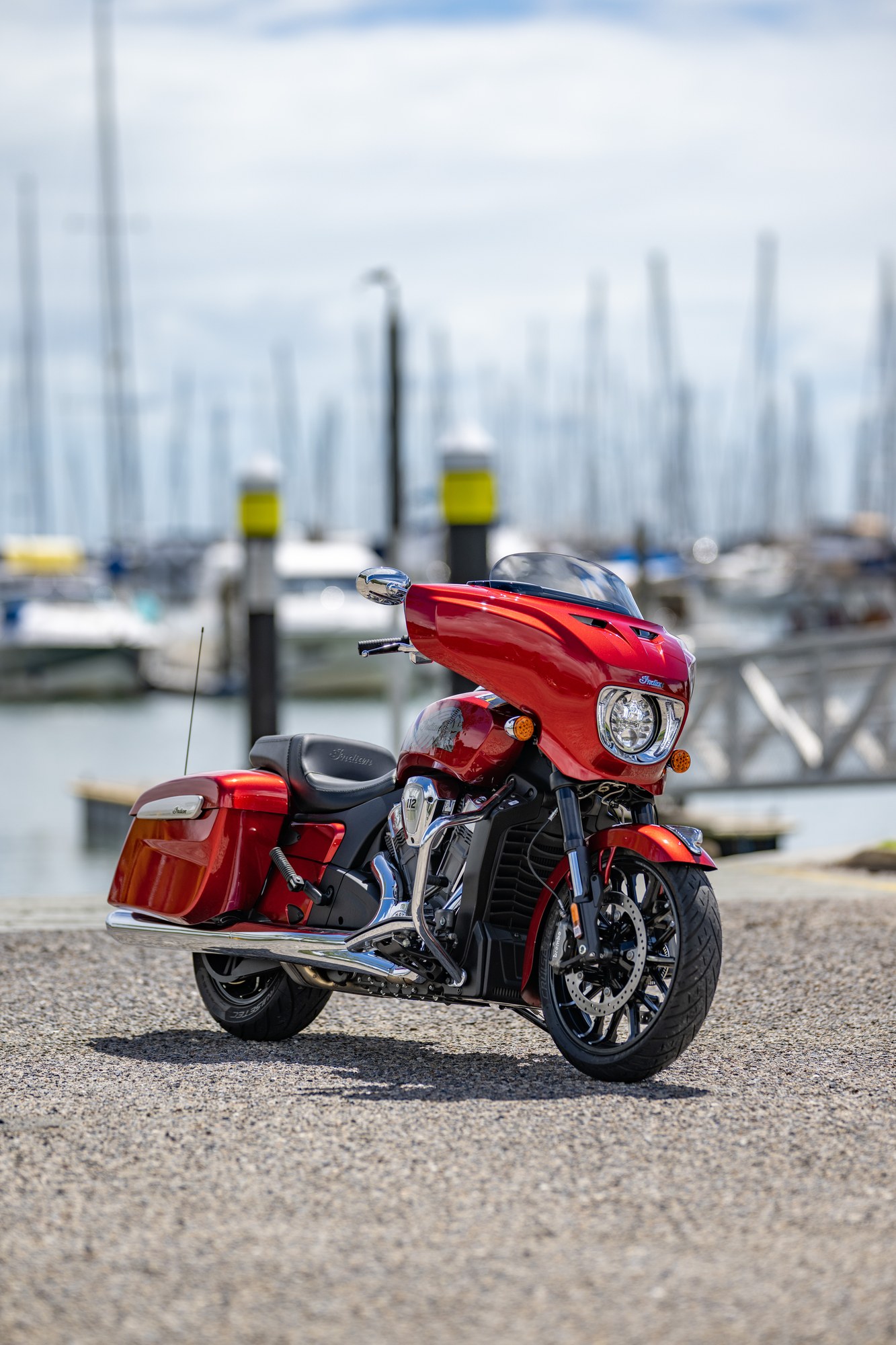
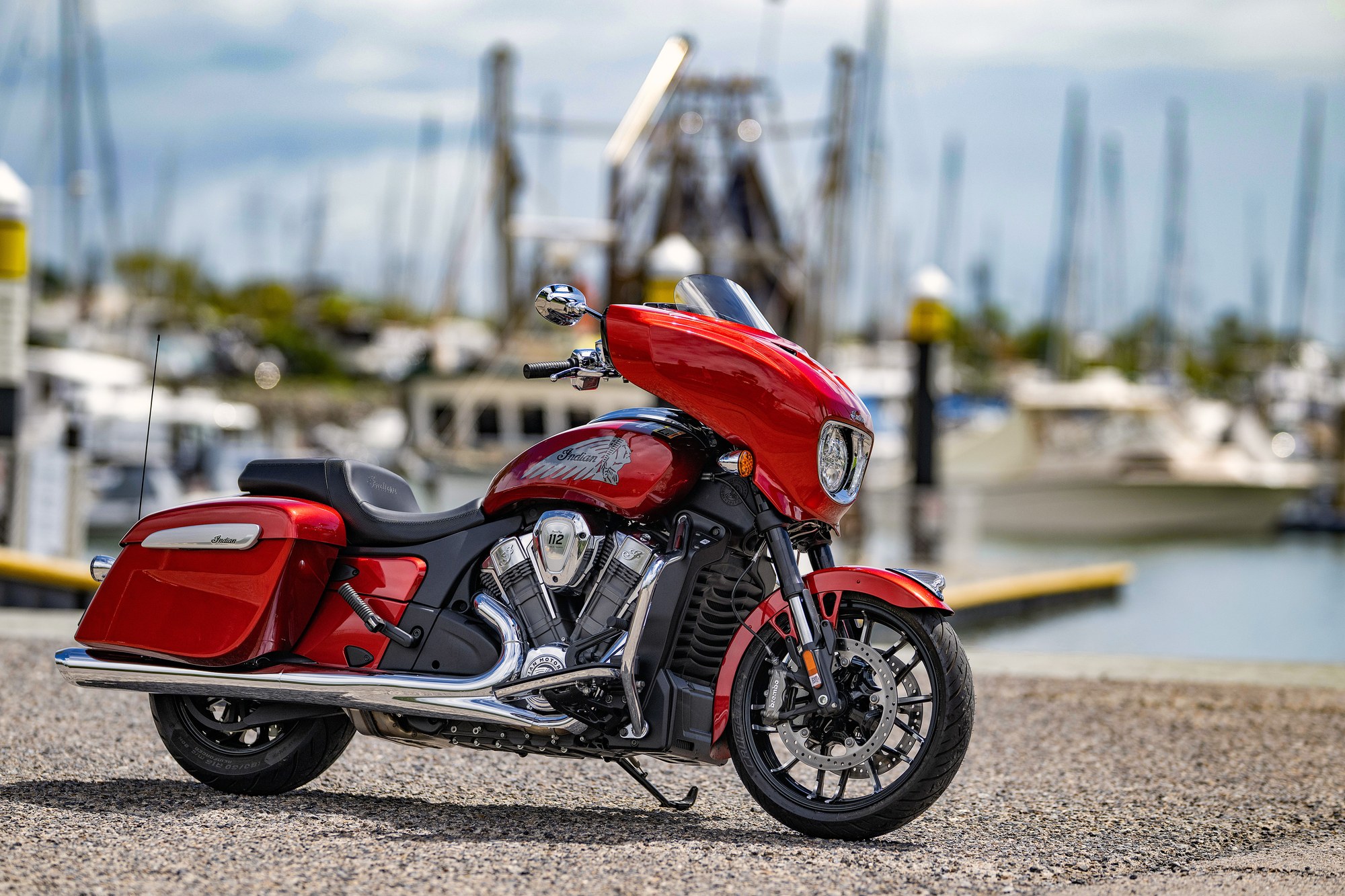
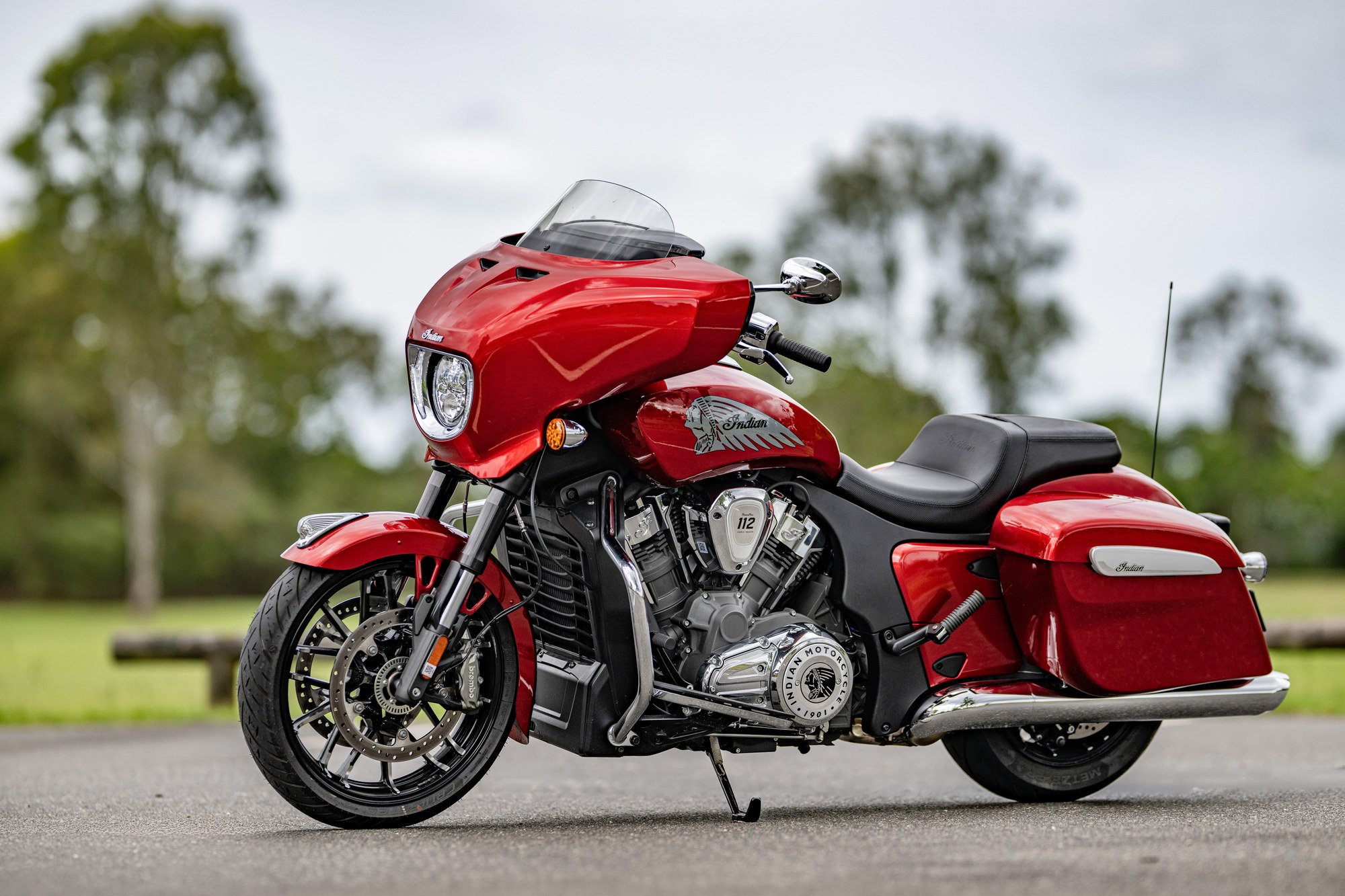
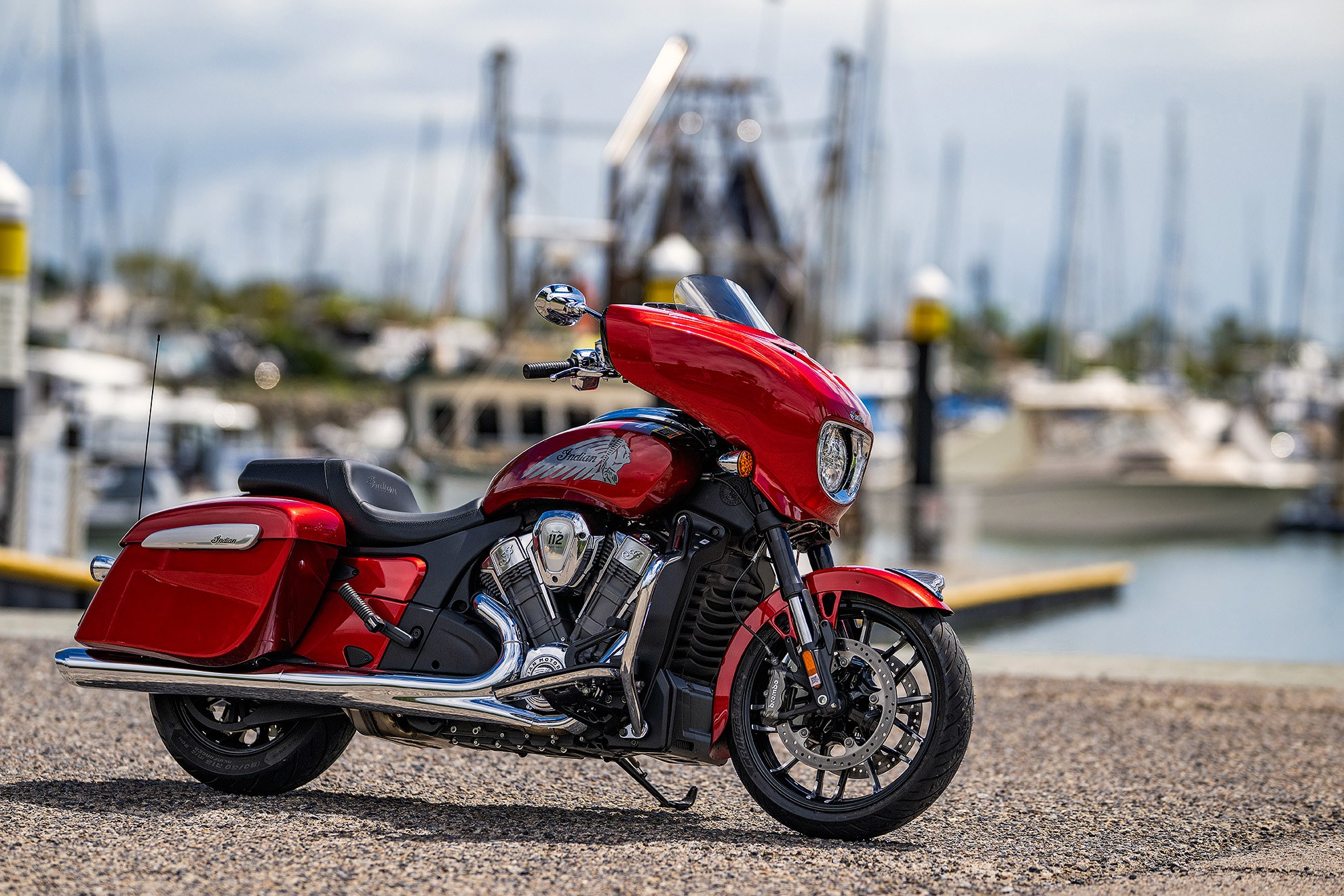
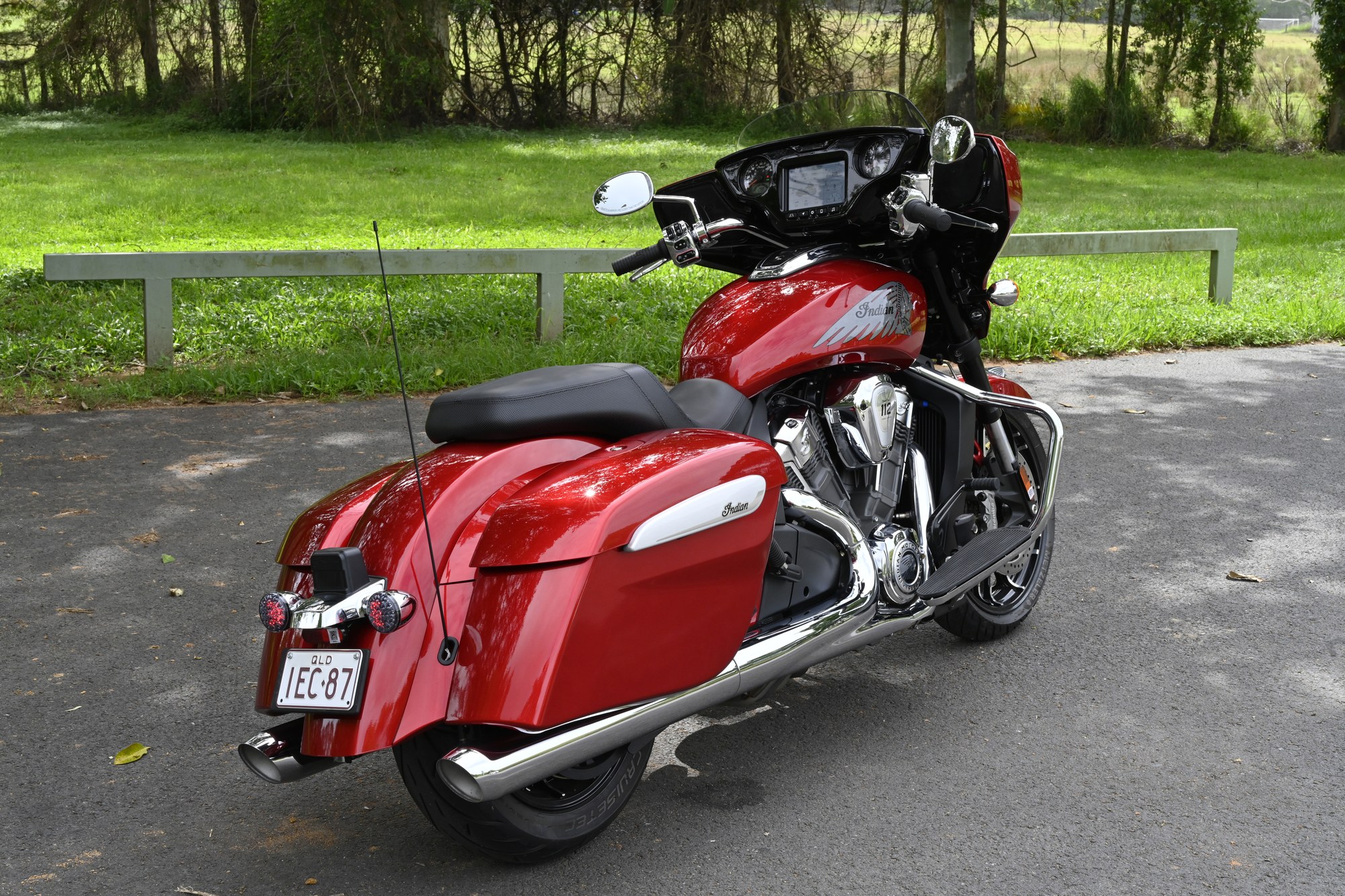
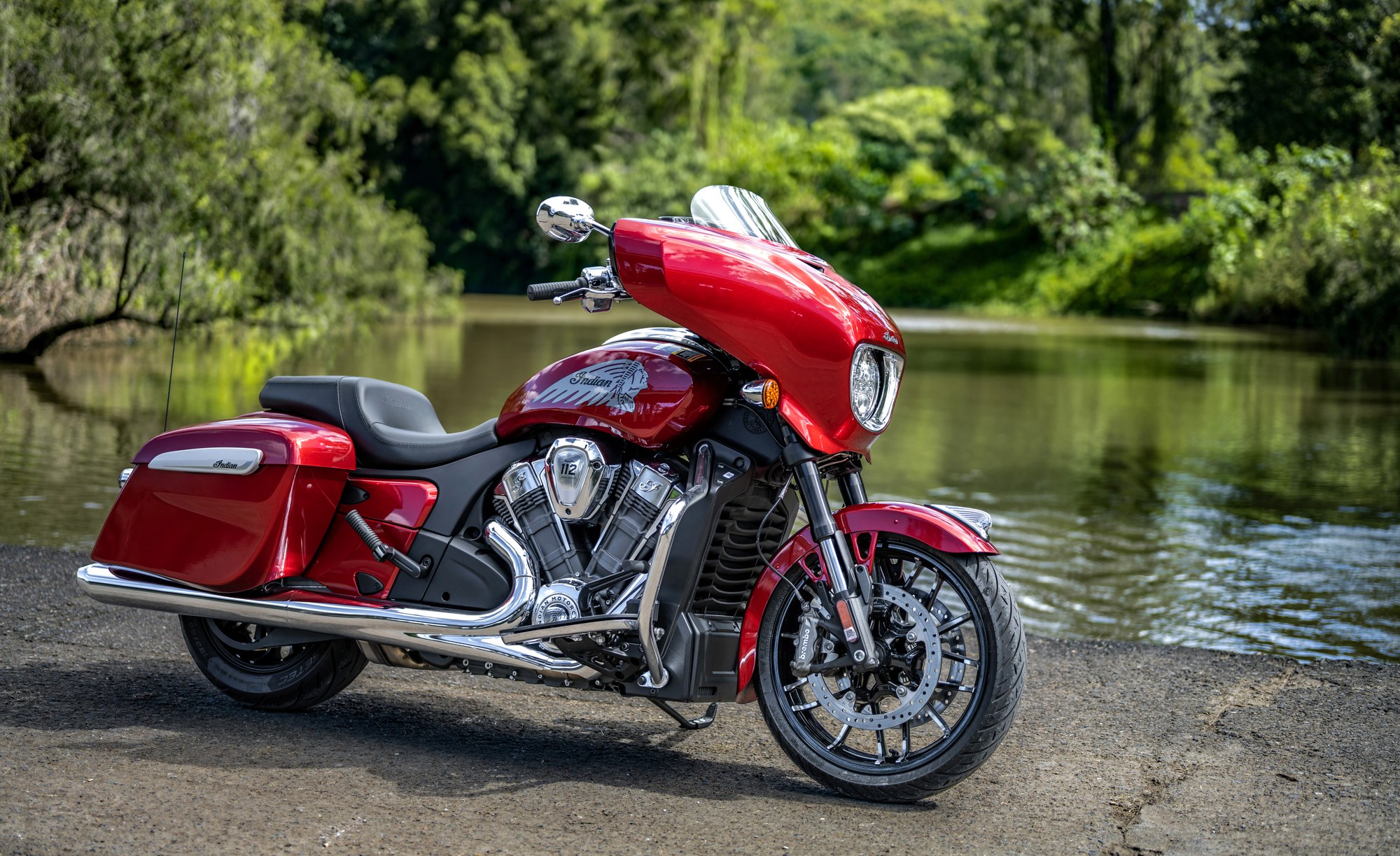
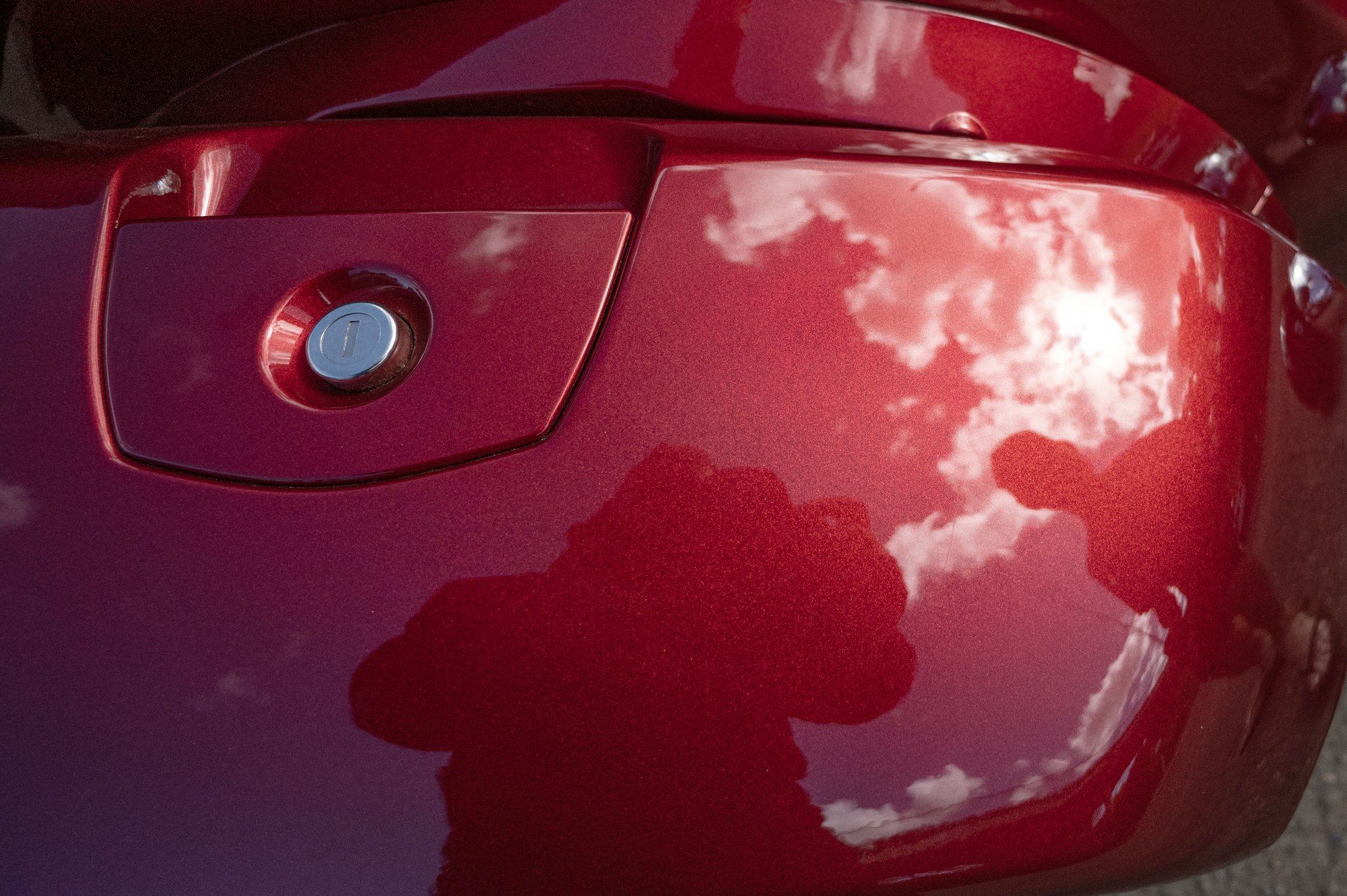
To that end, it is a striking-looking motorcycle. The standard paint is some of the best I have seen in a very long time, with a rich, deep metallic fleck that catches the light perfectly. I found it has a pleasing line, with a fine curve and waist from most angles.
Nice touches abound.
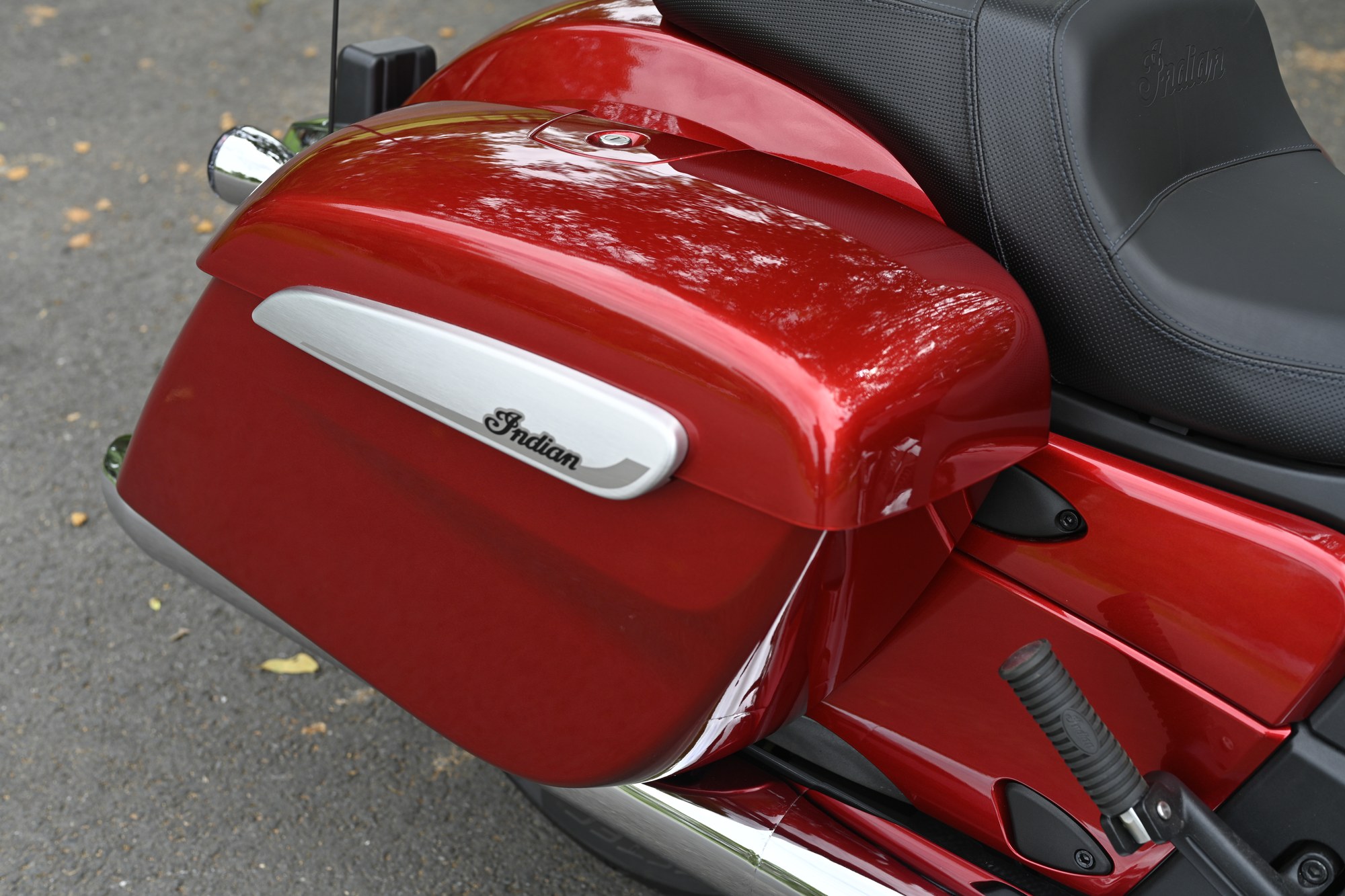
The 68-litre panniers carried my camera kit comfortably and are remote-locking. It has remote tyre-pressure sensors, brilliant LED lighting and some features I have never before encountered.
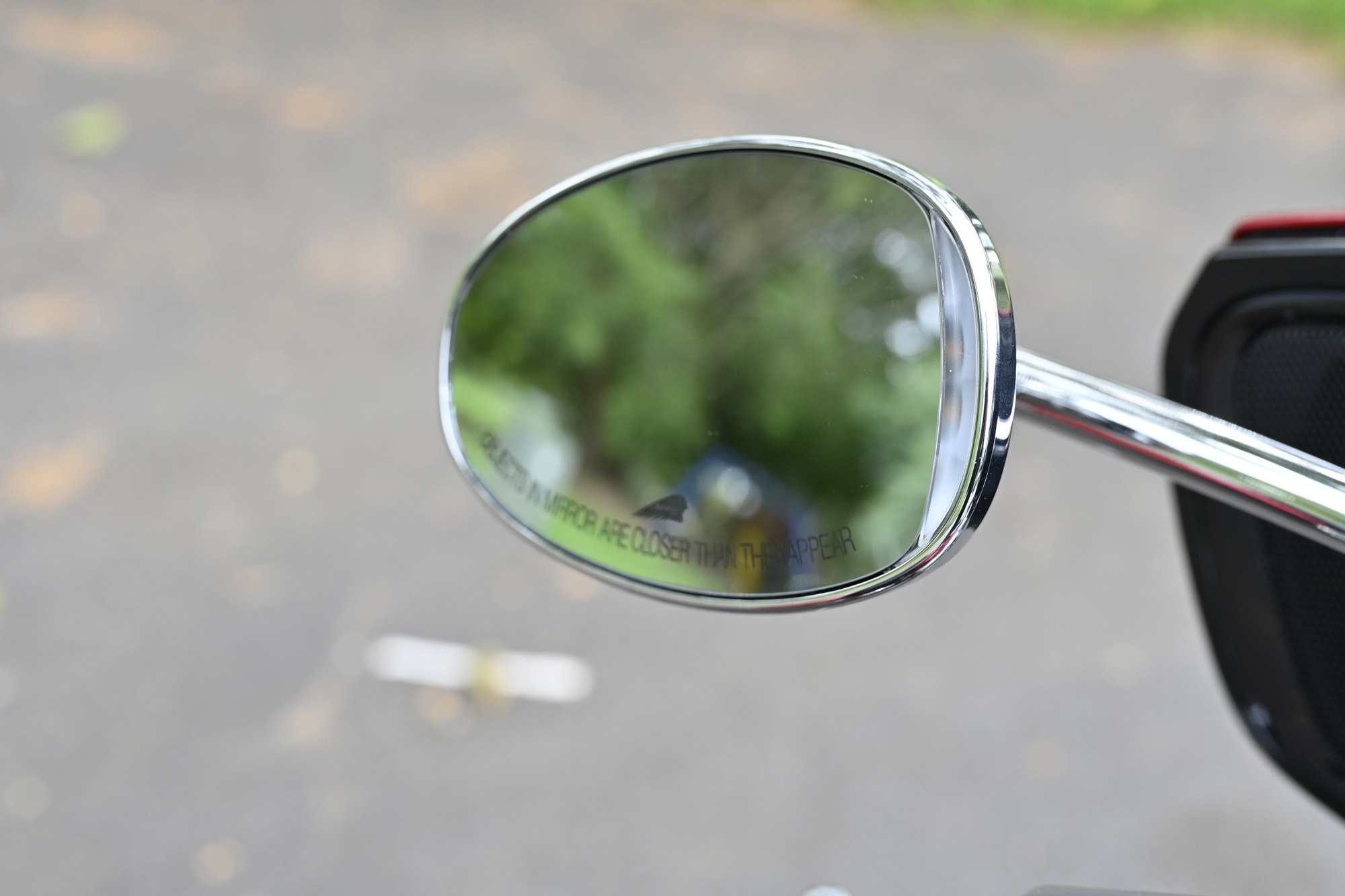
Mounted within the excellent mirrors are LEDs that indicate blind-spot and lane-change warnings, while rear-end and tailgater warnings are displayed on the touchscreen.
I actually came to appreciate these features. They mean it’s not necessary to head-check a freeway lane change when I already know there is a vehicle alongside but out of my eyeline. Nice.
Evolved
The last Chieftain I tested was back in 2019. In 2026, I found that the model has evolved significantly over that time, and the latest incarnation is quite easily the best and most sophisticated yet.
In fact, as I discovered when I turned the onboard stereo’s volume control all the way up to maximum — it goes to eleven.
Things I liked
That engine.
The technology.
The paint.
Things I didn’t
The phone-compartment lid.
Things I’d change
A slightly taller screen.
A pillion backrest.
Guts and Bolts
Performance
Power122 hp
Peak torque181.4 Nm @ 3800 rpm
Weight366 kg dry
Fuel capacity22.7 L
Engine
TypePowerPlus 112
Capacity1834 cc
Bore × stroke110 × 96.5 mm
Compression11.4:1
Fuel systemClosed-loop EFI, dual 52 mm bores
ClutchWet multi-plate, assist
Frame
Front suspensionInverted fork, 130 mm travel
Rear suspensionSingle shock, hydraulic preload, 114 mm travel
Wheelbase1668 mm
Seat height672 mm
Ground clearance137 mm
Rake / trail25° / 150 mm
Brakes / Touring
Front brakeBrembo calipers, dual 320 mm semi-floating rotors
Rear brakeSingle 298 mm floating rotor
Front tyreMetzeler Cruisetec 130/60B19 66H
Rear tyreMetzeler Cruisetec 180/60R16 80H
Lean angle31°
Length2503 mm